Let’s be honest, the term "digital transformation" gets thrown around a lot. It sounds big, complicated, and maybe a little intimidating. But if we strip away the corporate jargon, what are we really talking about?
At its core, digital transformation is about finding smarter, more efficient ways to run your business using today's technology. It's not just about buying new software; it’s a fundamental shift in how your entire organisation works—from the way your team collaborates to how you deliver value to your customers. It's about connecting your people, processes, and technology so that your business becomes more resilient, transparent, and effective.
Defining Digital Transformation Without The Buzzwords
Forget the consultant-speak for a moment. Think of it this way: digital transformation is about solving old, familiar business problems with new tools. It’s a complete reimagining of how your business operates day-to-day.
Let’s take a simple example. Imagine a local cafe still running on pen and paper. Orders are handwritten dockets, stocktake is a manual weekend job, and figuring out what’s selling well is pure guesswork. We’ve all seen it. Things work, but there’s friction—lost orders, stock shortages, and missed opportunities.
Now, let's picture that same cafe after making a digital shift.

The only visible change might be a simple tablet on the counter, but behind the scenes, everything is different:
- Smarter Processes: Orders punched into the tablet appear instantly on a screen in the kitchen. No more messy handwriting, fewer mistakes, and faster service for customers.
- Data-Driven Decisions: Every sale is logged automatically. The owner can now see with certainty that flat whites are the top seller on Tuesday mornings and can roster staff accordingly. This is business intelligence in action—using real data, not just gut feel, to make strategic calls. You can dive deeper into this with our guide on what is business intelligence and key resources.
- A Better Customer Experience: The system has a built-in loyalty program that tracks visits and rewards repeat customers, giving them a reason to come back again and again.
See? It’s not about the gadget itself. It’s about how that simple piece of technology completely changes the way the business runs for the better.
It Is a Cultural and Operational Shift
This brings us to a crucial point: the technology is just the tool. The real change happens when your team gets on board and embraces these new ways of working. It’s about breaking down old silos between departments and moving from tedious, manual tasks to smooth, automated workflows.
"Digital transformation isn't just about adopting new tech: it's about rethinking how value is delivered. It involves automation, data, AI, and cloud to reshape business operations."
This shift in culture nurtures a mindset of constant improvement. The end goal isn't just to be more efficient; it's to build a more agile and responsive organisation that can adapt to whatever the market throws at it. For another perspective, this glossary entry on Digital Transformation offers a concise definition.
From Manual To Automated
To really grasp the on-the-ground impact, let’s look at how everyday business functions change before and after a digital overhaul. This isn't theoretical; it's the practical difference between being stuck in old habits and embracing a connected, automated future.
A Glimpse at Traditional vs Transformed Business Operations
This table breaks down how digital tools can turn manual, disconnected tasks into integrated, automated workflows that save time and reduce errors.
| Business Function | Traditional Approach (Manual and Siloed) | Transformed Approach (Automated and Integrated) |
|---|---|---|
| Sales | Manually updating spreadsheets with lead info, often leading to missed follow-ups. | Using a CRM where leads are automatically captured, assigned, and tracked through a clear visual pipeline. |
| Finance | Manually creating invoices, chasing payments via email, and reconciling bank statements by hand. | Automated invoicing from a central system, with payment reminders and seamless bank reconciliation. |
| Operations | Managing projects with a chaotic mix of emails, separate documents, and verbal updates. | Using a work management platform like monday.com for clear project timelines, tasks, and real-time progress. |
| Customer Service | Handling all support queries through a single email inbox or phone line, with no tracking history. | An integrated helpdesk system that logs every interaction, creating a clear history for faster, better resolution. |
As you can see, the "after" column isn't just about doing the same things faster. It represents a more intelligent and connected way of operating, freeing up your team to focus on what truly matters.
Why Digital Transformation Matters for New Zealand SMBs
So we've covered what digital transformation is, but the real question for any Kiwi business owner is simple: why should I care? For small and medium businesses in New Zealand, this isn't some abstract concept or a luxury reserved for the big players. It’s a nuts-and-bolts strategy for survival, growth, and simply staying in the game.
Embracing digital ways of working is about more than just keeping pace. It's how you future-proof your business, giving you the agility and efficiency to not just compete with larger companies, but to outmanoeuvre them. The payoff is real: better productivity, happier customers, and sharper decisions backed by actual data.
Thriving in a Highly Connected Aotearoa
New Zealand is a uniquely connected country, and that digital reality creates both massive opportunities and serious pressure. Kiwis expect things to work seamlessly online, and that expectation sets the pace for business. This isn't just a fleeting trend—it's the new baseline for how we live and work.
Just look at our mobile use. There are 6.22 million active mobile connections in New Zealand, a staggering 118% of our total population. That tells you a lot of us are juggling multiple devices, blurring the lines between work and home life. With 99.8% of those connections being high-speed broadband, the demand for instant, on-the-go access is baked into our culture.
This digital fluency means your team needs to connect from the field, your workflows need to be automated, and your customers need to be served without being tethered to an office. You can dig into more of these numbers in the latest Digital New Zealand report.
For an SMB, this high-connectivity environment means your customers, employees, and competitors are already operating digitally. Failing to meet them there is no longer an option.
This is precisely where transformation stops being a choice and becomes a necessity. By getting modern systems in place, you give your people the tools to do their jobs from anywhere, keeping your business humming along, no matter what.
Gaining a True Competitive Edge
In a tight market, efficiency is your secret weapon. Digital transformation lets smaller businesses punch far above their weight by automating the grunt work—the manual, time-sucking tasks that kill productivity and clog up your operations.
Let's break down what that actually looks like:
- Better Productivity: Imagine automating your invoicing, data entry, or project updates. Suddenly, your team is freed up to focus on what really matters: talking to customers and growing the business.
- A-Grade Customer Experience: A slick CRM or a simple online booking system doesn't just make your life easier. It gives your customers a smooth, professional experience that builds trust and keeps them coming back.
- Smarter Decisions: Instead of running on gut feelings, you can use real-time data to see what’s working and what’s not. You can spot problems before they become disasters and make calls that actually improve your bottom line.
These aren't just minor tweaks; they represent a fundamental upgrade to how your business operates. It’s about gaining the agility to react to market shifts faster than your bigger, more cumbersome competitors. These are the kinds of essential business IT solutions Kiwi SMBs should consider to start building that advantage today.
At the end of the day, digital transformation for a New Zealand SMB is about building a smarter, stronger, and more customer-focused business. It’s the key to unlocking new levels of efficiency and creating a solid foundation for real, sustainable growth.
The Three Pillars of a Successful Transformation
It’s easy to fall into the trap of thinking digital transformation is just a technology problem. Buy the shiny new software, plug it in, and wait for the magic to happen. But that approach almost never works.
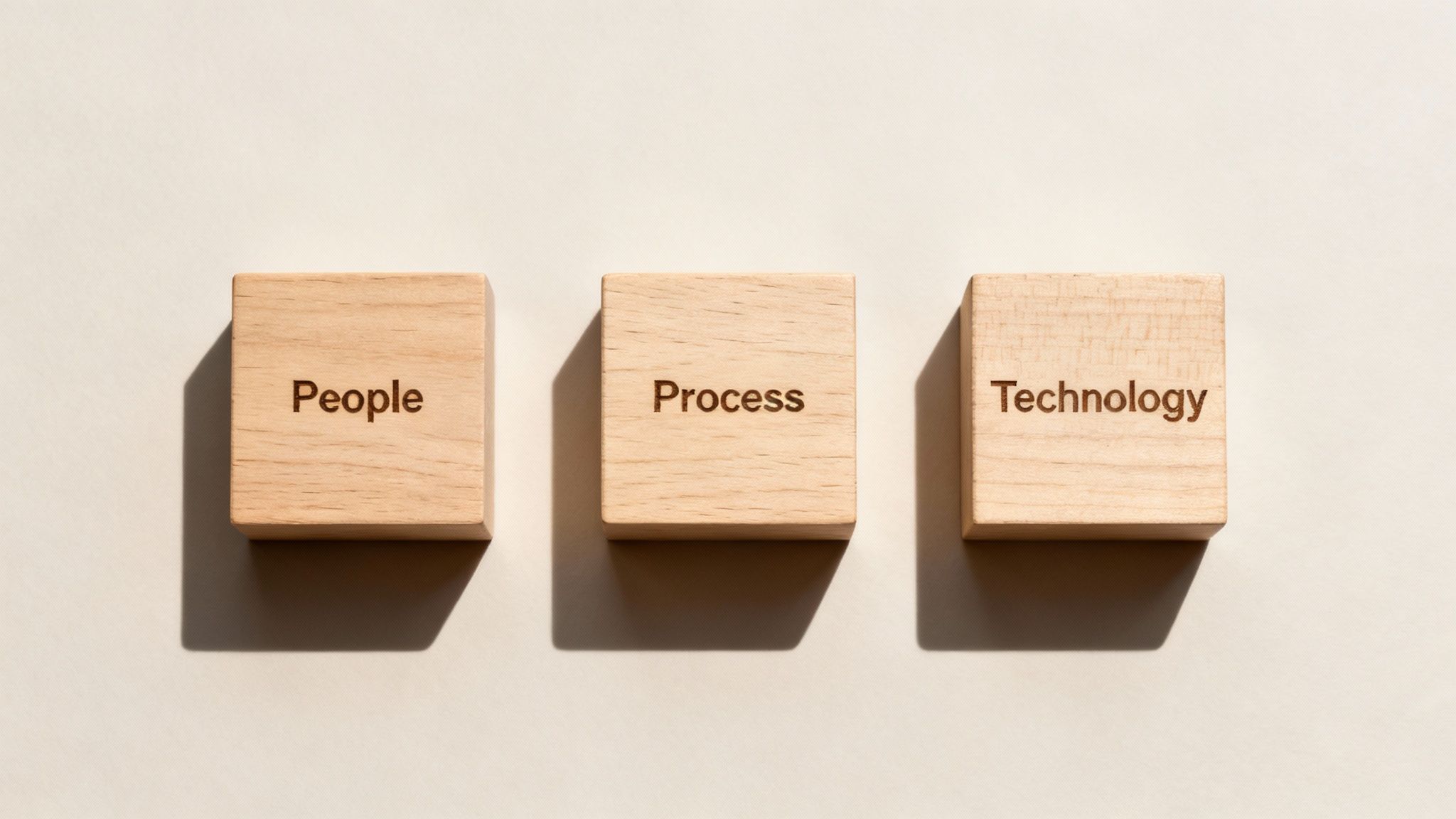
A real transformation is like a well-built stool—it needs three strong, balanced legs to stand on. If one is weak or overlooked, the whole thing comes crashing down.
These three essential pillars are People, Process, and Technology. They're completely interconnected, and you only get real, lasting change when you address all three in harmony. Focusing only on technology is like buying a Formula 1 car without hiring a driver or even knowing where the racetrack is.
Pillar 1: People and Culture
At the end of the day, your people will make or break any new initiative. You can bring in the most sophisticated system on the planet, but if your team doesn't get it, trust it, or want to use it, you've just bought a very expensive digital paperweight.
This pillar is all about building a culture that's ready for change. It has to start with clear leadership. Your team needs to understand the why behind the shift, not just the what. Once they see how a new tool will cut down their manual work or get rid of frustrating bottlenecks, you’ll find that resistance quickly turns into advocacy.
Here’s how to get your people on board:
- Champion Change from the Top: Leadership needs to be the biggest cheerleader for the new direction, consistently and visibly.
- Invest in Training and Upskilling: Give your team practical, hands-on training so they feel confident and capable with the new tools.
- Foster Open Communication: Create genuine channels for feedback. Listen to concerns and address them head-on to build trust.
Pillar 2: Process Redesign
Before you even think about technology, you have to get your processes right. This is a classic misstep. So many businesses try to digitise a broken, inefficient workflow, which just creates a faster way to do the wrong thing.
Process redesign means taking a hard, honest look at how work actually gets done. Map out your current workflows, step by step. Pinpoint every manual task, every point of friction, and every unnecessary delay. Only then can you start redesigning those processes for a digital-first world, building in automation and efficiency from the ground up.
The goal isn't to simply digitise what you've always done. It's to fundamentally reimagine how work flows through your organisation to deliver more value, more effectively.
Getting this stage right lays the entire foundation. A clear, optimised process becomes the blueprint for the technology you eventually choose. Without it, you’re just shooting in the dark.
Pillar 3: Technology Enablement
Finally, we get to technology. This pillar should always be chosen to serve the first two. The right technology is simply the one that empowers your people and brings your redesigned processes to life. It’s the enabler, not the starting point.
This could be implementing a work management platform like monday.com to give your operations team true visibility over projects. It might mean developing bespoke software to connect your existing systems and kill manual data entry for good. Or, it could be a move to managed IT and cloud services to make sure your infrastructure is secure, reliable, and ready to scale.
Of course, making this pillar work requires a solid national infrastructure to support it. Here in New Zealand, we're well-equipped with 95.7% internet penetration and a 70% fibre coverage rate. This provides a fantastic backbone for modern, connected solutions.
However, the tech is only part of the story. Challenges like skills shortages and a reliance on old systems mean that two-thirds of government systems remain outdated—a stark reminder that infrastructure isn't enough without a clear strategy. You can learn more about New Zealand's digital economy and its potential here.
The key is alignment. When your technology, processes, and people all work in sync, you create a powerful engine for growth. That harmony is the true definition of a successful digital transformation.
Navigating The Common Roadblocks on Your Journey
Let's be realistic—any major business change is going to have its bumps in the road. While the upsides of digital transformation are huge, the path to get there is often peppered with challenges that can grind everything to a halt if you’re not prepared. For New Zealand SMBs, these roadblocks are almost always predictable and, thankfully, entirely manageable with a bit of foresight.
Understanding what you’re up against—from staff pushback and tight budgets to skills shortages and security fears—is half the battle. When you anticipate these hurdles, you can build a plan to navigate them, turning potential problems into moments that actually strengthen your business. It's not about having a problem-free journey; it's about being ready for the ones you know are coming.
Overcoming Resistance to Change
Nine times out of ten, the biggest roadblock has nothing to do with technology and everything to do with people. Resistance to new ways of working usually comes from a pretty human place: a fear of the unknown or the worry that a new tool will just make their job harder. The fix isn't to force it on them, but to lead with empathy and clear communication.
As soon as your team understands the why—how this new system will get rid of that mind-numbing spreadsheet they hate, or cut down on frustrating mistakes—they’ll get on board. They'll shift from being blockers to being your biggest advocates.
- Communicate the Vision Clearly: Show them what’s in it for them. Frame it as a way to make their work more meaningful and less of a grind, not just as a benefit for the company's bottom line.
- Provide Hands-On Training: Nobody likes feeling clueless. Make sure your team gets proper, practical training so they feel confident and supported right from the start.
- Create Champions: Find those keen team members who are excited about the change. Make them your internal champions who can help their colleagues and show off the benefits in a real, peer-to-peer way.
A successful transformation is built on trust. When you invest in helping your people adapt, they will invest their energy into making the new systems work.
This people-first approach turns what could be your biggest headache into a powerful engine for success.
Addressing Budget and Resource Limitations
For a lot of SMBs, the very idea of a "digital transformation" sounds expensive. It brings to mind massive, company-wide projects with eye-watering price tags. But it doesn't have to be that way. A smart transformation doesn't start with a giant leap; it starts with small, strategic steps.
The best approach is to start small, prove the value, and then scale up. This way, the savings and new revenue you generate from the first win can help fund the next stage.
Instead of trying to boil the ocean, pick the one area causing the most pain. Automating a single, painfully manual process could free up dozens of hours a week. That gives you an immediate, tangible return on investment that makes it easy to justify taking the next step.
Bridging the Digital Skills Gap
Another major hurdle is finding the right people. New Zealand's IT market is projected to grow from NZ$7.12 billion to NZ$8.52 billion, but that growth is creating a serious shortage of specialised talent. In fact, a staggering 70% of organisations are struggling to hire AI experts, and 79% admit they don't have the in-house skills to train their teams effectively. This is where leaning on a partner makes all the sense in the world. You can find out more about NZ's IT market trends and the skills challenge here.
Working with experts in managed services, custom software, and platform rollouts lets you modernise without being hamstrung by a shallow talent pool.
Finally, there’s the security question. As your business gets more connected, it’s natural to worry about protecting your data. But here’s the thing: modern, cloud-based tools often come with far more robust, enterprise-level security than the old, on-site systems they replace. A well-planned transformation doesn’t just make you more efficient; it actually hardens your defences, protecting both your business and your customers.
Your Actionable Digital Transformation Roadmap
Knowing what digital transformation is and why it matters is one thing; actually starting the journey is a whole different ball game. For many businesses, the idea feels so big and complicated that it's easy to get stuck in "analysis paralysis" before you even begin.
The trick is to stop thinking about it as one giant leap and instead see it as a series of manageable steps. A proven, practical way to approach this is with a simple Plan, Build, and Deliver framework. This isn’t some stuffy academic theory—it’s a straightforward roadmap designed to turn your big ideas into real-world results, one step at a time. It makes sure you start with a strong foundation, choose the right tools for the job, and actually get your team on board with new ways of working.
Phase 1: The Plan
This first phase is where the magic really happens. It’s all about discovery and getting everyone on the same page. If you skip this, you’re essentially setting off on a road trip without a map—you'll burn a lot of fuel just going around in circles. The goal here is to get brutally honest about where your business is right now and crystal clear on where you want it to go.
First, you need to assess your current state. This means mapping out your existing processes, especially the ones that make everyone groan. Where is your team still doing manual data entry? Where do communication wires always seem to get crossed? Pinpointing these specific friction points gives you a clear problem to solve.
With those problems in mind, you can define clear, achievable goals. What does "better" actually look like for you? Maybe it's cutting invoice processing time by 50%, boosting lead conversion rates by 20%, or slashing project delays by a third. The more specific and measurable, the better.
Finally, and this is non-negotiable, you must secure leadership buy-in. Your entire management team needs to believe in the vision and be prepared to champion the change. This top-down support is absolutely essential for pushing through the inevitable hiccups that come with any big project.
Phase 2: The Build
With a solid plan locked in, it’s time to start building. This is where you move from strategy to solutions, turning your goals into something tangible. It’s about more than just buying new software; it's about carefully designing the engine that will power your more efficient business.
Your first move is selecting the right technology and partners. Armed with the pain points you uncovered in the planning phase, you can now look for tools that solve those specific problems. Whether it's a platform like monday.com to get a handle on project chaos or exploring process automation services to boost your NZ business, the decision should always be driven by your unique needs.
Once you’ve chosen your tools, the focus shifts to designing and configuring your new workflows. This is a hands-on, collaborative effort where you build out the new processes inside your chosen platform, making sure the system is set up to support your team’s daily work in the most intuitive way possible.
Having a well-defined roadmap is one thing, but the actual rollout can be tricky. Getting expert implementation support for your digital roadmap from people who've done it before can be a game-changer, helping you sidestep common traps and get it right the first time.
Phase 3: The Deliver
This is the home stretch. The final phase is all about bringing your new systems to life and, crucially, making sure they stick. The project transitions from being a technical one to a people-focused one. Success here is all about a smooth and supportive rollout.
It all starts with comprehensive team training and support. Your people need to feel confident with the new tools from day one. Proper, hands-on training that’s tailored to their specific roles isn't a nice-to-have; it's essential for adoption.
From there, it's time for the phased rollout and go-live. It’s almost always a bad idea to flip the switch for everyone at once. A much smarter approach is to launch with one department or a small pilot group first. This lets you iron out any kinks on a smaller scale before rolling it out to the whole organisation.
But the journey isn't over when you go live. The final, ongoing step is measurement and optimisation. Using those KPIs you defined back in the planning phase, you need to continuously track performance, get feedback from your team, and make small, iterative improvements. Digital transformation isn't a one-and-done project—it's a cycle of getting better, every day.
This roadmap gives you a clear path forward, but knowing how to handle common roadblocks like team resistance, budget worries, and skills gaps is what will keep you moving.
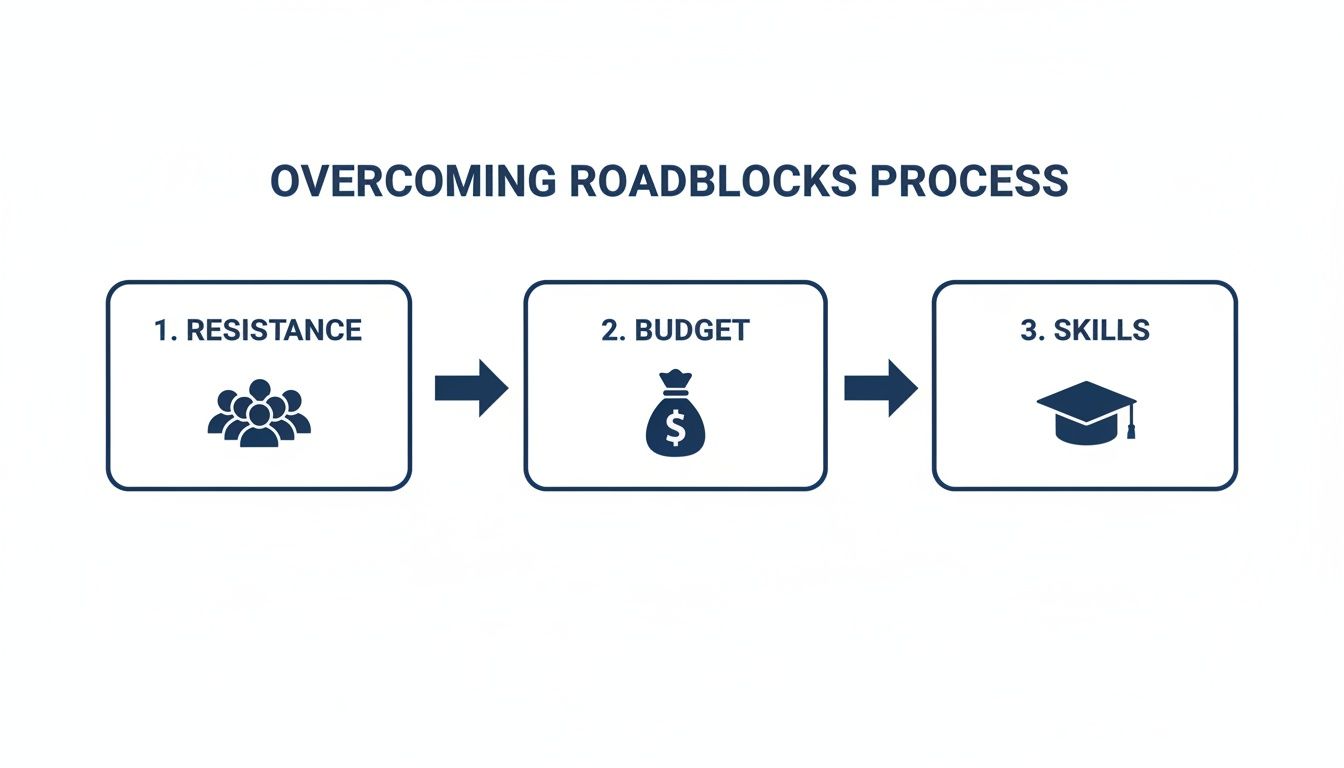
As you can see, getting past these hurdles requires a strategic, people-first approach every step of the way.
Common Questions About Digital Transformation
Even with a clear plan in place, it's natural for practical questions to pop up. When you start thinking about what digital transformation really means for your specific business, you'll naturally wonder about timelines, costs, and where on earth to actually start.
We get it. Here are the most common questions NZ business owners ask us, along with some straightforward answers to help you get moving.
How Long Does a Typical Digital Transformation Project Take?
This is the classic "how long is a piece of string?" question. There's just no single answer. The timeline depends entirely on the size of your business, the complexity of the processes you’re looking to improve, and how ambitious your goals are.
A tightly focused project, like rolling out a new CRM pipeline for your sales team, might only take a few weeks to get set up and have everyone feeling confident using it.
On the other hand, a company-wide overhaul that touches multiple departments or involves building custom software could easily take anywhere from six months to over a year.
The real key is to change how you think about it. This isn't a one-off project with a hard finish line; it’s a journey of continuous improvement. The smartest approach is to start with one specific, high-impact area. This way, you score some quick wins, show clear value to your team, and build real momentum for what comes next.
Is Digital Transformation Only for Large Companies?
Absolutely not. In fact, we find that small to mid-sized businesses (SMBs) often have the upper hand here. They can be far more agile and adapt to change much faster than big, bureaucratic corporations that are often stuck with layers of management and clunky legacy systems.
For an SMB, real-world digital transformation might look like:
- Automating your invoicing and payment reminders to fix cash flow and cut down on admin headaches.
- Using a platform like monday.com to manage projects with total clarity, so everyone knows who's doing what and when.
- Setting up a secure cloud backup system to protect your critical business data from disaster.
These aren't massive, expensive undertakings. They're smart changes that deliver a huge return. They free up your team's most valuable resource—their time—and let you punch well above your weight. It’s not about size; it's about being smarter and more efficient.
What Is the Very First Step I Should Take to Start?
The most important first step has absolutely nothing to do with buying new software. Before you even think about technology, you have to get a deep understanding of your current processes and pinpoint the single biggest bottleneck holding you back.
Get your team together and ask some direct questions:
- What's that one repetitive, manual task that chews up the most time every week?
- Where do things get stuck? Where do communication breakdowns or delays happen most often?
- If we could fix just one process, which one would make the biggest difference for our customers?
Start there. Pick that one process and map it out, from the very first step to the very last. Get crystal clear on every handover and potential roadblock. Once you have that detailed picture, then you can start looking for a solution that solves that specific, real-world problem—not just jumping on the latest tech trend. Having a strategic partner guide this discovery phase can be invaluable.
How Do I Measure the Success of Digital Transformation?
Success should always be measured against the clear, tangible business goals you set right at the start. It's not about how many new apps you've installed. It’s about the measurable impact those tools are having on your operations and your bottom line.
Your Key Performance Indicators (KPIs) have to be directly linked to the problems you wanted to solve. For instance, you might define success by:
- A 15% reduction in operational costs within six months.
- A 20% increase in lead conversion rates after bringing in a new CRM.
- A noticeable improvement in your customer satisfaction (CSAT) scores.
- A 30% drop in time spent on manual data entry, which you can see in team timesheets.
For the person managing the finances, a key metric might be better accuracy in cash flow forecasting. For your operations team, it could be a measurable drop in project delays. By defining these outcomes upfront, you give yourself a clear way to track your return on investment and prove the value of every single change you make.
Ready to stop guessing and start building a more efficient, resilient business? Wisely designs and delivers unified solutions that connect your people, processes, and technology. From expert monday.com implementation to managed IT and bespoke software, we provide the roadmap and the expertise to make your digital transformation a success. Start your journey with us today.