In Auckland's bustling business world, sticking to a reactive, break-fix IT model is no longer just inefficient—it's a liability. Smart SMEs are making the switch to proactive managed IT services in Auckland, turning technology from a constant headache into a genuine asset for growth.
Why Auckland Businesses Need Proactive IT Partners

Moving away from an in-house team or a collection of unreliable contractors is a major strategic decision. It's about getting ahead of problems instead of just reacting to them, building a tech foundation that’s resilient, secure, and ready for whatever comes next.
For local businesses, this shift unlocks some serious advantages:
- Top-Tier Expertise on Tap: You get immediate access to specialists in cybersecurity, cloud infrastructure, and network management—all without the hefty price tag of hiring them full-time.
- Predictable Monthly Costs: Say goodbye to surprise capital expenses. A fixed operational cost makes IT budgeting straightforward and simple.
- Stronger Cybersecurity Defences: A dedicated partner is always watching for threats, keeping systems updated, and implementing robust security to protect your valuable data.
- Focus on What You Do Best: Free up your people to concentrate on innovation, serving customers, and growing the business, rather than getting bogged down by IT glitches.
Just as importantly, a proactive partner helps you put together a pragmatic plan for recovery so your business can handle disruptions without missing a beat.
This kind of strategic oversight is essential here in Auckland, the country's digital services hub. The city is home to roughly 50% of all data processing and web hosting service locations in New Zealand, with IT service sales hitting an incredible NZ$14.49 billion in 2023.
By aligning your technology with clear business goals—which might include exploring powerful tools like business process automation services—you give your company a real competitive edge.
What You Should Actually Get From Your IT Provider
When you bring a managed IT services provider on board in Auckland, you’re not just buying a fix-it service. You're investing in a whole system designed to keep your business technology running smoothly, securely, and effectively. It’s far more than troubleshooting—it's a proactive strategy for managing every piece of tech you rely on.
At the very least, any decent managed services package will have a few core components. Think of these as the absolute non-negotiables, the foundation of any reliable IT support.
The Must-Haves: Support and Monitoring
The most crucial service, hands down, is 24/7 proactive monitoring. This means your provider isn't just sitting around waiting for your call. They're using sophisticated tools to keep an eye on your servers, network, and devices, spotting and fixing potential issues long before they can cause any real disruption. This should always be backed by a responsive helpdesk, so your team can get expert help the moment they need it.
Working hand-in-glove with monitoring is solid network management. This is all about maintaining the health and security of your network's plumbing—the routers, switches, and firewalls that keep your data flowing safely where it needs to go.
An effective managed IT service becomes the digital nervous system for your business. It senses trouble and triggers a response before you even notice there's a problem, turning IT from a reactive expense into a genuine operational advantage.
Beyond the Basics: Security and Business Continuity
In today's world, the basics aren't enough. A modern IT partner needs to offer more advanced services to shield your business from ever-evolving threats and make sure you can keep operating, no matter what happens.
Here’s what to look for:
- Real Cybersecurity Protection: This goes way beyond simple antivirus software. It should cover endpoint security for every device, properly managed firewalls, and active threat hunting to stop things like ransomware and phishing attacks in their tracks.
- Cloud Infrastructure Management: Whether you’re on Microsoft Azure or AWS, your provider needs the expertise to manage, fine-tune, and secure your cloud setup to keep costs down and performance up.
- Data Backup and Disaster Recovery: Regular, verified data backups are essential. But even more important is a proper disaster recovery plan that ensures you can get back up and running quickly after a major incident, keeping your business alive.
How to Evaluate Managed IT Service Providers in Auckland
Choosing a partner for your managed IT services in Auckland is a major business decision, one that goes far beyond a simple price comparison. A great provider becomes a genuine strategic asset. On the flip side, a poor fit can create constant operational headaches and leave you exposed to security risks. The evaluation process really needs a deeper look into how a provider operates and what they actually guarantee.
When you're starting your search, it’s a good idea to research a few information technology companies in Auckland just to get a feel for the local market. This initial legwork helps you build a shortlist of potential partners who seem to align with what your business needs.
Decoding Service Level Agreements
A Service Level Agreement (SLA) is the contract that spells out the standard of service you can expect, but let's be clear: not all SLAs are created equal. You have to distinguish between response time and resolution time. A fast response is nice, but it’s the time taken to actually fix the problem that impacts your business.
Look for clear, tiered priorities in any SLA. A critical server outage should have a much faster guaranteed resolution time than a minor printer issue. Don't be shy about asking providers to share their average resolution times for different types of incidents to get a realistic picture of their performance.
This decision tree can help you figure out if your current IT approach is proactive enough for where you want to go.
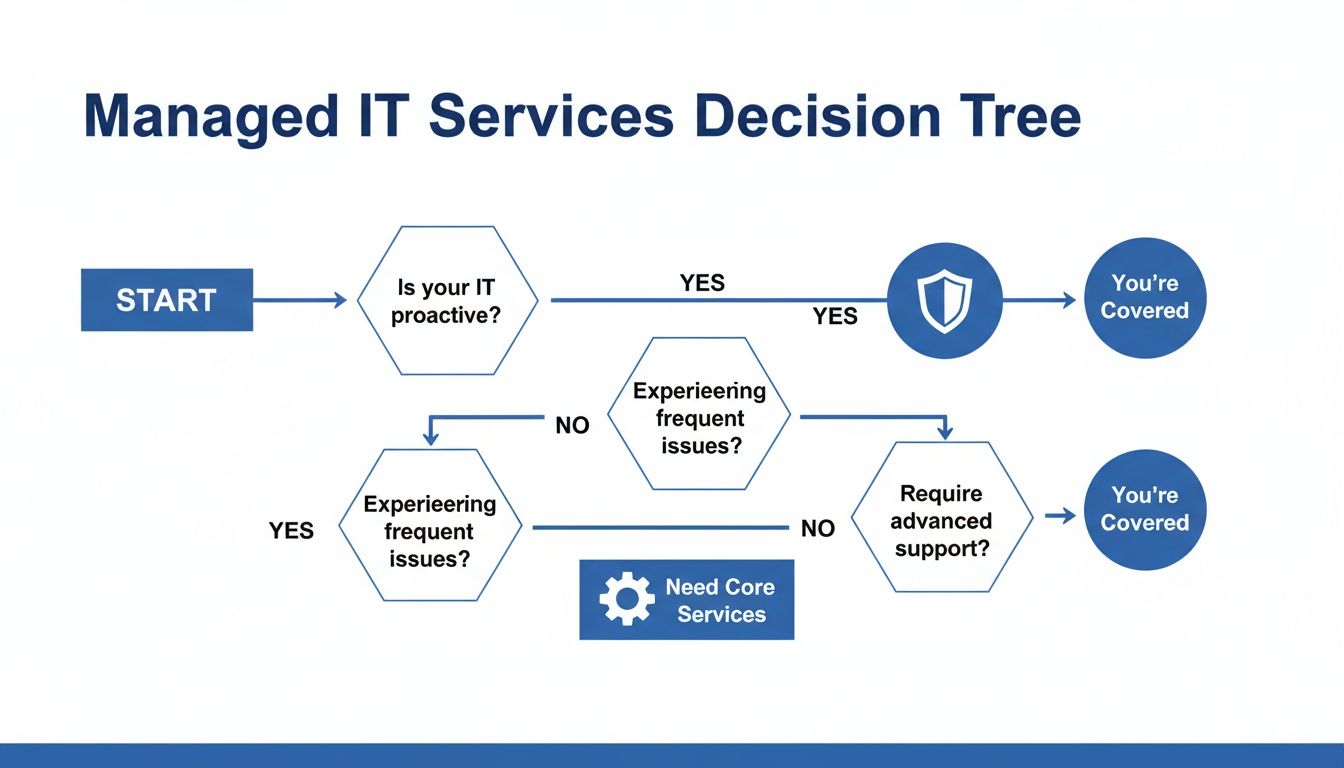
As the flowchart shows, a purely reactive stance often leads to the same problems cropping up again and again. This really highlights why you need solid managed services to build a stable foundation.
Assessing Technical and Security Expertise
A provider's technical depth is another massive factor. Don’t just take their word for it—ask for proof. This is where you can see real-world results by exploring their client success stories and digging into their case studies.
Here are a few key areas to investigate:
- Cybersecurity Posture: Do they hold recognised certifications? Can they show you how they proactively hunt for threats and respond to incidents?
- Cloud Platform Fluency: How deep is their expertise in platforms like Azure or AWS? Can they help you optimise your cloud spending and tighten up security?
- Industry Experience: Have they worked with businesses in your sector before? Do they understand your specific compliance rules or operational quirks?
The right managed IT services provider doesn't just fix problems—they prevent them. Their value is measured not in the number of tickets they close, but in the number of incidents that never happen in the first place because of their proactive management.
This proactive approach is more important than ever, especially given New Zealand's tight IT labour market. With a staggering 96% of NZ IT employers anticipating skill shortages, outsourcing becomes a smart financial move. In fact, research shows that businesses can cut IT operational costs by 20–30% with managed services compared to running an in-house team.
Navigating Auckland's Unique IT and Security Challenges

Running a business in Auckland means facing a unique set of tech hurdles that a generic, one-size-fits-all provider often misses. As New Zealand's economic powerhouse, the city is a magnet for cybercriminals and a battleground for top IT talent. This reality calls for a truly local approach to managing your technology.
A local partner providing managed IT services in Auckland gets these pressures. They can help you sidestep the fierce competition for tech experts, giving you specialised skills without the headache and high cost of building an in-house team. That kind of local insight is gold.
Responding to Local Threats
The constant pressure of cybersecurity is a huge reason businesses here look for local IT support. Being the country's biggest digital hub puts Auckland businesses squarely in the crosshairs for a disproportionate number of security incidents. This heightened risk means you need a provider who knows the local threat landscape inside and out.
CERT NZ’s data from 2023 showed a worrying 27% jump in cybersecurity incidents across the country. More telling, though, is that Auckland businesses were the target in a staggering 41% of all reported cases.
A local team on the ground gives you a massive strategic advantage: rapid incident response. When a critical system goes down or you suspect a breach, having experts who can physically be there in a flash is a complete game-changer for getting back to business.
This is the kind of immediate, hands-on support that remote-only providers just can't offer. For any Auckland business, that local presence adds a vital layer of security and resilience. To protect your business, you need a solid defensive strategy, and a great place to start is with our essential SMB defence guide for cyber security in New Zealand.
Integrating IT Support with Business Strategy

The real mark of a valuable IT partner isn’t just how well they maintain your systems. It’s how they actively help you achieve your business goals. When IT support becomes truly strategic, your provider shifts from being a background utility to a central part of your growth plan.
This is where technology stops being a simple line item and starts working for you. Every decision, from a software update to a network overhaul, gets tied directly to a business outcome. Suddenly, IT is no longer a cost centre but a powerful driver of efficiency, profit, and your competitive edge.
From Technical Fixes to Business Solutions
Any IT provider can fix a broken computer. A great one understands your business inside and out, allowing them to recommend technology that delivers real, measurable results. This kind of partnership requires them to get a handle on your day-to-day workflows, your financial targets, and where you want to be in five years.
Here’s how that plays out for Auckland businesses:
- Process Automation: Say your team is adopting a tool like monday.com to manage workflows. A basic setup is one thing, but a strategic partner ensures your network infrastructure is solid and secure enough to handle it. This turns a good piece of software into a genuine productivity engine.
- Financial Insights: If you’re using Virtual CFO services, you live and die by accurate, accessible data. An integrated IT provider makes sure your financial systems are expertly managed and securely backed up, giving your leadership the reliable information they need to make smart decisions.
The ultimate goal of strategic IT is to make the technology invisible. When your systems are so well aligned with how you work, they just work. Your team can stop wrestling with tech and focus completely on hitting their targets.
This deep integration is what separates standard managed IT from a true business partnership. By choosing a provider that thinks holistically, you’re not just outsourcing support—you’re investing in a unified strategy. The right partner for managed IT services in Auckland will deliver genuine operational improvements and build a robust foundation for long-term growth.
Your Top Questions About Managed IT Services, Answered
Choosing a managed IT partner is a big decision, and it’s natural to have questions. We get it. To help clear things up, we’ve put together straightforward answers to the questions we hear most often from Auckland business owners.
How Much Should I Expect to Pay
For most Auckland businesses, you can expect pricing to fall somewhere between NZ$50 and NZ$150 per user, per month. What you actually pay will come down to the size of your team and exactly what you need them to do.
A basic plan might just cover the essentials like system monitoring and access to a helpdesk. But if you need more, like advanced cybersecurity, cloud management, or high-level strategic advice, you'll be looking at a more comprehensive package. Always ask for a detailed, itemised quote so you know exactly what you're getting—no surprises.
What Is a Typical Contract Length
Most agreements for managed IT services sit in the 12 to 36-month range. While you might get a better monthly rate for signing on for a longer term, a shorter contract can give you more breathing room if you expect your business needs to shift.
A good provider will be completely open about their terms. They should have clear service level guarantees, explain how you can scale services up or down, and detail their termination policies. The goal is an agreement that supports your business's financial and operational plans, not one that holds you back.
The right contract isn't just about length; it's about partnership. It should feel like a flexible framework for growth, not a rigid lock-in, giving you confidence that your IT support can evolve alongside your business.
How Is the Transition Handled
When you partner with professional managed IT services in Auckland, they’ll handle the entire switch for you, making sure the process is smooth and doesn't interrupt your business. It all starts with a deep dive into your current setup, where they audit everything to understand how your environment works.
After that, they'll roll out their management tools and get everything documented. The migration itself is carefully mapped out to cause as little disruption as possible. You can expect clear communication every step of the way, with scheduled data transfers, network changes, and any training your team needs on new systems.
At Wisely, we see your technology as more than just a cost—it's a strategic asset. By bringing together managed IT, process automation, and financial services, we help make your business more resilient, efficient, and ready to take on what's next.
Discover how Wisely can build a stronger foundation for your business today.