At its heart, IT consulting is about bringing in specialist advisory and implementation expertise to help businesses make their technology work for their specific operational goals. These services provide external, objective guidance to cut through complex challenges and boost efficiency.
Understanding the Core Purpose of IT Consulting
Think of IT consulting as the bridge connecting your business vision to the technology that makes it happen. A consultant’s main job is to take a hard look at your organisation’s current tech setup and processes, then lay out a clear, strategic roadmap for making it all better. This could be anything from recommending a new piece of software to completely overhauling your digital workflows.
Having that fresh pair of eyes is invaluable. It helps businesses spot opportunities they might have been too close to see. For instance, a consultant might find major inefficiencies in how data is managed or suggest clever automation that frees your team from tedious manual tasks. Many great resources explain how IT consulting services really function as a strategic partnership designed for growth.
We can see the primary roles and responsibilities of IT consulting broken down into a few core functions.
Core Functions of IT Consulting
| Function | Objective |
|---|---|
| Strategic Planning | Align IT infrastructure with long-term business goals. |
| Technology Assessment | Analyse existing systems to identify weaknesses and opportunities. |
| Implementation & Support | Deploy new technologies and provide ongoing management. |
| Process Optimisation | Redesign workflows to improve efficiency and reduce costs. |
| Cybersecurity Advisory | Strengthen security measures to protect critical business assets. |
Ultimately, each of these functions works toward the same outcome: turning your technology into a powerful asset that actively drives productivity and profitability. You can dive deeper into how Wisely's own managed IT services deliver these results for businesses across New Zealand.
Exploring the Main Types of IT Consulting
The world of IT consulting is massive, covering everything from high-level, birds-eye-view strategy right down to hands-on technical support. Getting a handle on the different categories helps you zero in on the exact expertise your business needs to solve a specific challenge or chase down a growth opportunity. Generally, these services break down into a few key areas.
This map shows how a good IT consultant connects the dots between your business strategy and the technology solutions needed to make it happen.
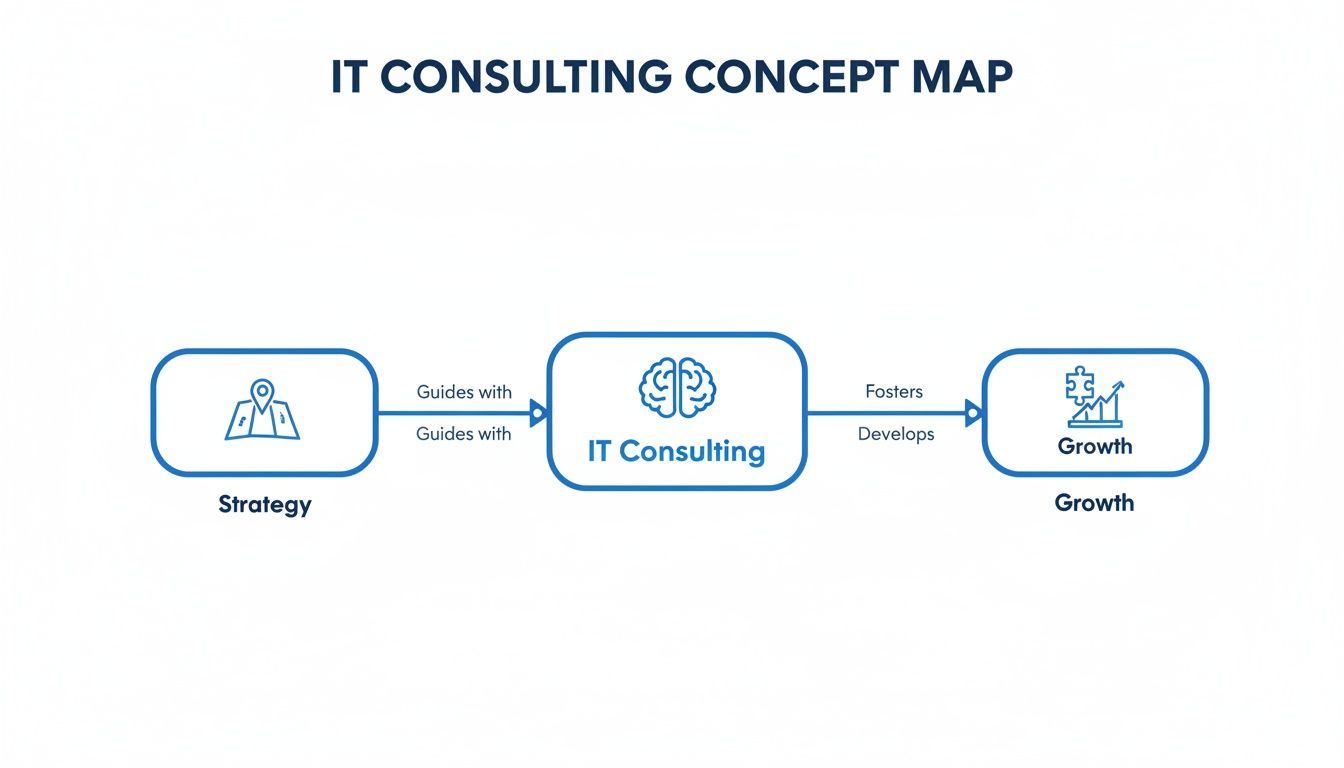
What it really highlights is that successful IT consulting isn't just about big ideas or just about tech. It's about integrating forward-thinking plans with practical, well-executed solutions to deliver progress you can actually measure. This dual focus ensures your technology investments are both effective and perfectly aligned with your long-term vision.
Common Service Categories
Most IT consulting offerings can be grouped together to make them easier to understand. Here are a few of the most common types your business is likely to come across:
- Cybersecurity Consulting: This is all about protecting your digital front door. Services can include everything from security audits and risk assessments to developing rock-solid incident response plans to defend against data breaches.
- Cloud Services: Consultants in this space are your guides to migrating, managing, and optimising cloud environments. You can learn more about expert cloud computing strategies and see how they create real scalability for businesses like yours.
- IT Strategy and Planning: Think of this as creating a technology roadmap that lines up perfectly with your business goals. The whole point is to make sure every dollar you spend on IT delivers a tangible return.
- Software and Workflow Implementation: This is a more hands-on service focused on getting specific tools, like monday.com, up and running to automate processes, improve how your teams work together, and boost productivity right across the board.
Why New Zealand Businesses Need IT Consulting
Operating in New Zealand presents a unique set of challenges, and for many Kiwi businesses, bringing in external expertise isn’t a luxury—it’s a necessity. Technology is moving so fast that internal teams often struggle to keep up, creating a skills gap that can be tough to close on your own. This is where IT consulting becomes so valuable for staying competitive.
Consultants bring that specialised, hard-to-find knowledge for complex projects like a full cloud migration, a major cybersecurity overhaul, or rolling out sophisticated automation. They also provide a fresh, objective perspective, helping you cut through internal roadblocks and find more efficient ways of working.
Driving Growth and Overcoming Challenges
When we talk to New Zealand organisations, the reasons for seeking out a consultant are usually pretty clear: they want to get a leg up on the competition and make their operations more resilient. In practice, this could be anything from protecting sensitive data against the latest cyber threats to completely rethinking workflows for better productivity.
You can see this demand reflected in the numbers. New Zealand's consulting services sector, which includes IT expertise, hit $13.3 billion in 2024, growing at a steady clip of 4.2% on average each year since 2019. It’s clear that businesses are leaning on external advisors to help shape their digital strategy. You can read more about the growth of NZ's consulting market on ibisworld.com.
Ultimately, a partnership with the right consultants lets you focus on what you do best, leaving the technical heavy lifting to the experts. For a closer look at one way this works, check out our guide on managed IT services for New Zealand businesses.
Measuring the Real Business Value of IT Consulting

When you invest in IT consulting, you're not just paying for technical fixes. You're looking for a real, measurable return on investment (ROI). The true value comes to light when expert advice translates directly into outcomes that strengthen your bottom line and make your operations more resilient.
These gains often show up in very concrete ways, like big jumps in productivity and serious cost savings. Think about it: implementing workflow automation can give you back hundreds of staff hours that were previously sucked up by manual, repetitive tasks. In the same way, a smart cloud migration strategy does more than just modernise your tech stack; it gives you genuine scalability and can slash your long-term operational expenses.
Connecting Technology to Financial Performance
The best IT consulting always ties every single initiative back to your key business metrics. It's this approach that builds a rock-solid case for technology investments inside your organisation.
- Increased Productivity: This is about putting a number on the time saved through better processes or faster systems.
- Reduced Operational Costs: You can calculate the savings from smoother workflows, lower infrastructure maintenance, or, crucially, preventing expensive downtime.
- Stronger Security Posture: The value here is measured by avoiding the massive financial and reputational hit that comes with a data breach.
As New Zealand businesses push to digitalise faster, we’re seeing huge growth in IT consulting and implementation, especially with investments in cloud and cybersecurity. In fact, the related IT outsourcing market is on track to hit US$1.09 billion by 2025. You can dig into more insights on the NZ's IT services market on statista.com.
How to Select the Right IT Consulting Partner

Choosing the right IT consulting services provider is a massive decision, one that can make or break your technology projects. The right partner becomes a genuine extension of your team, bringing the exact expertise you need to hit your goals—whether that's a complete cybersecurity overhaul or a highly specialised monday.com implementation.
On the flip side, the wrong choice can lead to eye-watering delays and results that completely miss the mark. To get it right, you need to look past the slick sales pitches and focus on hard evidence of their capability and reliability.
Key Evaluation Criteria
Your best bet is to create a checklist so you can compare potential partners on a level playing field. A solid assessment should cover a few key areas to make sure they’re not just technically sound, but also a good fit for your company culture and specific business needs.
- Proven Industry Experience: Have they actually worked in your industry before? A consultant who already gets the unique challenges and quirks of your market can deliver far more effective solutions, faster.
- Technical Expertise and Certifications: You need to verify their skills. Look for official certifications and partnerships that prove their proficiency, like being recognised as an advanced monday.com delivery partner.
- Client Testimonials and Case Studies: Don't be shy about asking for real client references and detailed case studies. This is where you find real-world proof of their ability to deliver results and manage projects without drama.
- Methodology and Support: How do they actually run their projects? And what happens after go-live? A clear, structured process and a solid commitment to ongoing support aren't just nice-to-haves; they're essential.
A great IT partner doesn’t just solve a single problem; they provide a strategic framework that supports long-term growth and resilience, making their ongoing support invaluable.
For a deeper dive into vetting experts, it’s worth checking out resources like this guide on How to Find and Hire the Right ISO Consultants, as many of the core principles are the same.
Frequently Asked Questions About IT Consulting
Here are some quick, clear answers to the questions we hear most often about IT consulting.
How Long Does an IT Consulting Engagement Last?
This really depends on what you need to achieve. A straightforward software audit might only take a few weeks to complete. On the other hand, a major project like a full-scale cloud migration or a company-wide digital overhaul could take several months or even longer.
The key thing is that any good consulting firm will map out the entire project timeline with clear milestones before they start. You should always know exactly what to expect and when.
What Is the Difference Between IT Consulting and Managed Services?
It's a great question, and the main difference is their focus. IT consulting services are strategic and project-based. You bring in a consultant to tackle a specific challenge, map out a new process, or provide expert advice for a particular goal.
In contrast, managed IT services are all about an ongoing partnership. You hand over the continuous responsibility for managing and maintaining some—or all—of your IT systems to an external provider. Think of it as getting strategic advice versus having someone handle the day-to-day operational management.
Is IT Consulting Only for Large Enterprises?
Absolutely not. While big corporations certainly rely on consultants, it’s often small and mid-sized businesses (SMBs) that see the most dramatic benefits.
Most SMBs don’t have large, in-house IT teams with specialised skills. Consultants give them access to high-level expertise in critical areas like cybersecurity, workflow automation, or cloud strategy. It lets them compete on a more level playing field without the huge overhead of hiring full-time specialists for every discipline.
Ready to turn technology into your biggest competitive advantage? The team at Wisely specialises in designing and implementing unified solutions that connect your people, processes, and platforms. From workflow automation with monday.com to robust managed IT and cybersecurity, we provide the strategic guidance and hands-on support you need to thrive. Explore how we can help your business at https://www.wiselyglobal.tech.