When we talk about modern workplace technology, we’re not just talking about shiny new laptops or the latest apps. It’s about building a smart, integrated digital ecosystem that helps your team work together seamlessly, automates the tedious stuff, and keeps everything secure, no matter where people are working.
It’s a complete system that weaves together collaboration platforms, cloud services, and robust security into a single, powerful engine for your business.
What Is Modern Workplace Technology?

Think of it as the central nervous system of your business. It's what connects your people, your processes, and your data, making your organisation more flexible, productive, and resilient. This isn't a "nice-to-have" anymore, especially for small and mid-sized New Zealand businesses. In today's world, agility is everything. Relying on outdated systems just creates friction, wastes time, and leaves your business exposed.
The Problem With Old-School Setups
We see this all the time. A local service firm is trying to manage projects with a patchwork of spreadsheets. Communication is a mess of endless email chains, and all their important files are stuck on a server in the office.
Sound familiar? It’s a recipe for disaster. Information gets lost, nobody knows which version of a document is the latest, and getting a simple task done takes forever. Hours are burned on manual data entry that could be spent actually helping clients.
This fragmented approach is more than just inefficient; it’s a roadblock to growth. The symptoms are probably all too familiar:
- Wasted Time: Staff spend far too long just trying to find information or redoing work because everything is scattered.
- Zero Visibility: It's almost impossible for leaders to get a clear, real-time picture of what’s going on, turning strategic decisions into guesswork.
- Major Security Risks: Storing sensitive data on local devices or using basic, unsecured tools is an open invitation for cybercriminals.
- No Room to Grow: As the business gets bigger, these manual, disconnected processes simply fall apart. They can't handle more complexity or a larger team.
Moving to modern workplace technology is about intentionally building a digital foundation that gets rid of these headaches. It’s a strategic shift from being bogged down by operational friction to creating a streamlined, secure, and productive future where your tech actively helps you hit your goals.
By breaking free from these limitations, you can unlock a whole new level of performance. This guide will walk you through how to build that foundation, starting with the core components that make it all click.
The Core Components of a High-Performing Workplace

Building a truly modern workplace isn't about simply buying the latest software. It's about carefully assembling a set of core technologies that all work together. Think of it less like a shopping list and more like building a high-performance engine for your business. Each part has a specific job, but its real power is only unleashed when it connects seamlessly with everything else.
This integrated approach is the heart of what we call modern workplace technology. Let’s break down the essential pillars that deliver real results, moving your business from disconnected chaos to coordinated success.
Seamless Collaboration and Work Management
Great teamwork is the bedrock of any successful business, but it quickly crumbles when communication is scattered across emails, various messaging apps, and out-of-date spreadsheets. A central collaboration platform acts as your team's digital headquarters, creating a single source of truth for every project, task, and conversation.
Tools like monday.com are perfect examples of this in action. Instead of chasing people for status updates, anyone can see real-time progress on a visual board. This kind of transparency eliminates countless check-in meetings and empowers team members to take ownership of their work. A managed services partner can help configure these platforms to perfectly match your unique workflows, ensuring you get maximum value right from the start.
Smart Workflow Automation
How much time does your team actually lose to repetitive, manual tasks? Think about creating invoices, sending follow-up emails, or just moving data between different apps. Each one of these small jobs adds up, draining productivity and introducing the very real risk of human error.
This is where workflow automation comes in. It uses technology to handle these rule-based processes for you. For instance, when a salesperson marks a deal as "won" in your CRM, an automation can instantly generate an invoice, notify the finance team, and create a new project for the delivery team. This isn't just about saving time; it's about creating reliable, consistent processes that free your team to focus on the work that actually grows the business.
Scalable Cloud Infrastructure
The days of being shackled to a physical server humming away in the office are well and truly over. Cloud infrastructure provides the flexibility and scalability that modern businesses need to thrive and grow. It allows your team to access critical files and applications securely from anywhere, on any device.
This pillar is about much more than just storage. A well-designed cloud setup, often built on platforms like Microsoft Azure, provides the backbone for all your other technologies. It ensures your systems are always available, backed up, and can handle increasing demands as your business expands—all without requiring huge upfront investments in hardware.
A common myth is that cloud services are complex and expensive. In reality, they offer enterprise-level security and performance at a predictable monthly cost, making them a game-changer for SMBs looking to compete with larger players.
Unified Endpoint Management
In today's workplace, your "endpoints" are all the devices your team uses to get their work done—laptops, smartphones, and tablets. In a flexible work environment, managing and securing this diverse fleet of devices can quickly become a massive headache.
Unified Endpoint Management (UEM) solves this by giving you a single console to control and secure every device. This allows your IT support to:
- Deploy software remotely to make sure everyone has the tools they need.
- Enforce security policies like strong passwords and data encryption across the board.
- Wipe a device remotely if it’s lost or stolen, protecting your sensitive company information.
This centralised control is absolutely essential for maintaining security and consistency, especially as your team grows and works from different locations.
Advanced Cybersecurity Defences
As your business becomes more digital, your exposure to cyber threats naturally increases. Modern cybersecurity is no longer just about installing antivirus software; it’s a multi-layered defence strategy designed to protect your data, your team, and your hard-earned reputation.
This includes advanced threat protection that can identify and block sophisticated phishing attacks, ransomware, and other nasty malware. It also involves robust identity and access management to ensure only authorised users can access sensitive systems. For a deeper dive into how these tools work together, you can explore our guide to Microsoft 365 Business Premium, which bundles many of these critical security features.
Strategic Integrations and Analytics
The real magic of modern workplace technology happens when your different systems can talk to each other. An Application Programming Interface (API) is the technical wizardry that makes this communication possible. A strategic API approach allows you to connect your collaboration tool with your accounting software, or your CRM with your marketing platform.
These integrations tear down data silos and eliminate manual data entry, giving you a complete, up-to-the-minute view of your business operations. This connected data then fuels the final, crucial pillar: analytics. By pulling information from across your business into a single dashboard, you can track key performance indicators, spot trends, and make smart decisions based on real-time data, not guesswork. A Virtual CFO service, for example, can use this integrated data to provide much sharper financial forecasting and strategic advice.
How Smart Technology Unlocks Real Business Growth
Bringing modern workplace technology into your business is so much more than a simple IT upgrade. Think of it as a direct investment in your company’s future. The real magic isn't in the flashy features of a new platform; it’s in the tangible, measurable outcomes it creates. When you get the strategy right, this technology becomes a powerful engine for productivity, resilience, and much smarter decision-making.
It’s all about shifting your team's focus from just doing tasks to achieving strategic goals. For instance, when a marketing team uses a tool like the monday.com CRM, they aren’t just logging contacts—they're actively slashing lead response times and converting more prospects. Likewise, a finance team that automates invoicing isn't just sending emails faster; they're improving cash flow and putting the company in a stronger financial position.
Boosting Team Productivity and Efficiency
One of the first things you’ll notice is the massive reduction in "work about work"—all that time your team loses chasing approvals, digging for information, or manually punching in data. Centralised platforms and automation give that time right back to them.
When your processes are streamlined, your people can finally concentrate on the high-value stuff that actually requires their creativity and critical thinking. This doesn't just boost output; it has a huge impact on job satisfaction, creating a more engaged and motivated team.
The core principle here is simple but incredibly powerful: technology should serve your people, not the other way around. The right tools get rid of the friction, letting your team's talent shine through and contribute directly to the company's growth.
Elevating the Employee Experience
Let's be honest, a clunky and unintuitive tech setup is no longer acceptable. Providing your team with tools that actually work shows you value their time and are invested in their success. This creates a positive culture where people feel empowered to do their best work, which is a massive drawcard for attracting and keeping top talent.
The ripple effect on your company culture is huge. When collaboration is effortless and information is easy to find, you build transparency and a stronger sense of shared purpose. You end up with a more connected and resilient organisation.
Enabling Smarter, Data-Driven Decisions
Guesswork is the enemy of sustainable growth. Modern workplace technology breaks down those frustrating information silos, pulling data from all corners of your business into one clear picture. This allows leaders to stop relying on gut feelings and start making strategic moves based on real-time, accurate information.
This data-first approach is quickly becoming a key competitive advantage. You only need to look at the rapid uptake of AI in New Zealand to see this shift in action. In early 2025, AI adoption hit 82% of New Zealand organisations—a massive 16-percentage-point jump from the previous year. It’s clear that Kiwi leaders are seeing its potential to reshape their operations. If you want to dive deeper into how artificial intelligence is changing the game, check out this piece on How AI Is Transforming Corporate Training.
Among Kiwi businesses already using AI, 48% have put solutions in place tailored to their specific operations, showing a clear move towards using data for targeted improvements. You can discover more insights about AI's productivity gains in New Zealand.
The Real Risk of Standing Still
While the benefits of new tech are clear, ignoring it carries some serious risks. Sticking with outdated, clunky systems isn't just inefficient; it's a strategic liability that can hold your business back in some critical ways.
- Growing Security Vulnerabilities: Old software often lacks the modern security needed to protect against today’s cyber threats, leaving your sensitive data dangerously exposed.
- Losing Competitive Ground: Your agile competitors are using technology to work faster and smarter. If you fall behind on tech, you’re almost certainly falling behind in the market.
- Inability to Scale: Manual, disconnected processes might just about work for a tiny team, but they will absolutely break under the pressure of growth, creating operational chaos.
Ultimately, investing in modern workplace technology isn't just another operational expense. It's a fundamental business strategy that fuels growth, protects you from risk, and builds a stronger, more competitive organisation for the future.
Your Practical Roadmap to Digital Transformation
Taking on a digital transformation project can feel like a massive undertaking, but it doesn’t have to be. With a structured, phased approach, you can turn a mountain of uncertainty into a series of manageable hills. This isn't about ticking boxes on a generic checklist; it's a strategic roadmap designed to de-risk the process and ensure every technology investment delivers real, measurable value.
Ultimately, successfully adopting modern workplace technology is less about the tools themselves and more about the thoughtful process behind them. It’s about understanding where you are, defining exactly where you want to go, and then building a clear path to get there with your team fully on board.
Phase 1: Assess and Define Your Goals
Before you even glance at a new piece of software, you need to get brutally honest about your current situation. What tools are your people using right now? Where are the biggest bottlenecks and points of friction in your daily operations? It's time for a frank audit of your existing tech stack.
This isn’t just about listing subscriptions. It's about digging into how work actually gets done—or doesn't. You might find your sales team is burning hours manually updating a clunky spreadsheet, or that project managers can't get clear status updates from different departments. These pain points are your starting line.
Once you’ve pinpointed the problems, you can define your goals. And this is critical: your goals must be tied to specific business outcomes, not just flashy tech features.
- Weak Goal: "We need a new project management tool."
- Strong Goal: "We need to slash project delivery times by 15% by giving our teams real-time visibility and automating status reporting."
This focus on outcomes makes sure you choose technology that actually solves your business challenges. As you map out your strategy, understanding the essence of digital transformation is crucial. It helps frame your thinking around real business value, not just IT upgrades.
Phase 2: Choose the Right Tools for the Job
With clear, outcome-driven goals in hand, you can finally start looking at solutions. This is where so many businesses stumble, getting distracted by cool features instead of homing in on their core needs. Your mission is to find tools that are not only powerful but also intuitive and scalable for your team.
Think about a growing construction firm. Their main goal is to improve on-site communication and nail their safety compliance. They don't need a monstrously complex enterprise system. What they need is a mobile-friendly platform like monday.com, where foremen can easily upload progress photos, tick off safety checks, and flag issues right from their phones.
The best technology is the technology your team will actually use. Involve your key people in the selection process. Their buy-in from the get-go is one of the strongest predictors of a successful adoption.
During this phase, lean on expert advice. A partner like Wisely can perform a detailed health check on your existing systems and recommend solutions that integrate seamlessly. This stops you from accidentally creating new data silos and ensures your modern workplace technology stack works as a unified whole.
Phase 3: Plan a Smooth Implementation and Manage Change
Here’s a hard truth: a successful technology rollout is 10% technology and 90% people. You can have the best software on the planet, but if your team doesn't understand how or why to use it, the project is destined to fail. A robust change management plan isn't a nice-to-have; it's non-negotiable.
Your implementation plan needs to be more than just a technical timeline. It must include:
- A Solid Communication Plan: Clearly explain the "why" behind the change. Spell out the problems the new tech solves and the direct benefits for each team member—less admin, easier collaboration, or faster access to information.
- Structured Training: Don't just dump a user manual on their desks. Organise hands-on training sessions tailored to different roles and set up ongoing support channels for questions after the launch.
- A Phased Rollout: For bigger changes, consider a pilot program with a small, enthusiastic group. They can become champions for the new system, providing valuable feedback and building momentum before a company-wide launch.
Managing the human side of change is where a structured partner really shines. By setting up clear governance and communication protocols, we help ensure the transition is smooth, minimising disruption and maximising buy-in from day one. This is especially vital when migrating core systems, like moving to a new cloud infrastructure. To get a handle on the foundational benefits, you might be interested in our guide on the advantages of cloud networking for your business.
This flowchart shows how the right technology boosts productivity, which in turn builds resilience and enables smarter, faster decisions for growth.
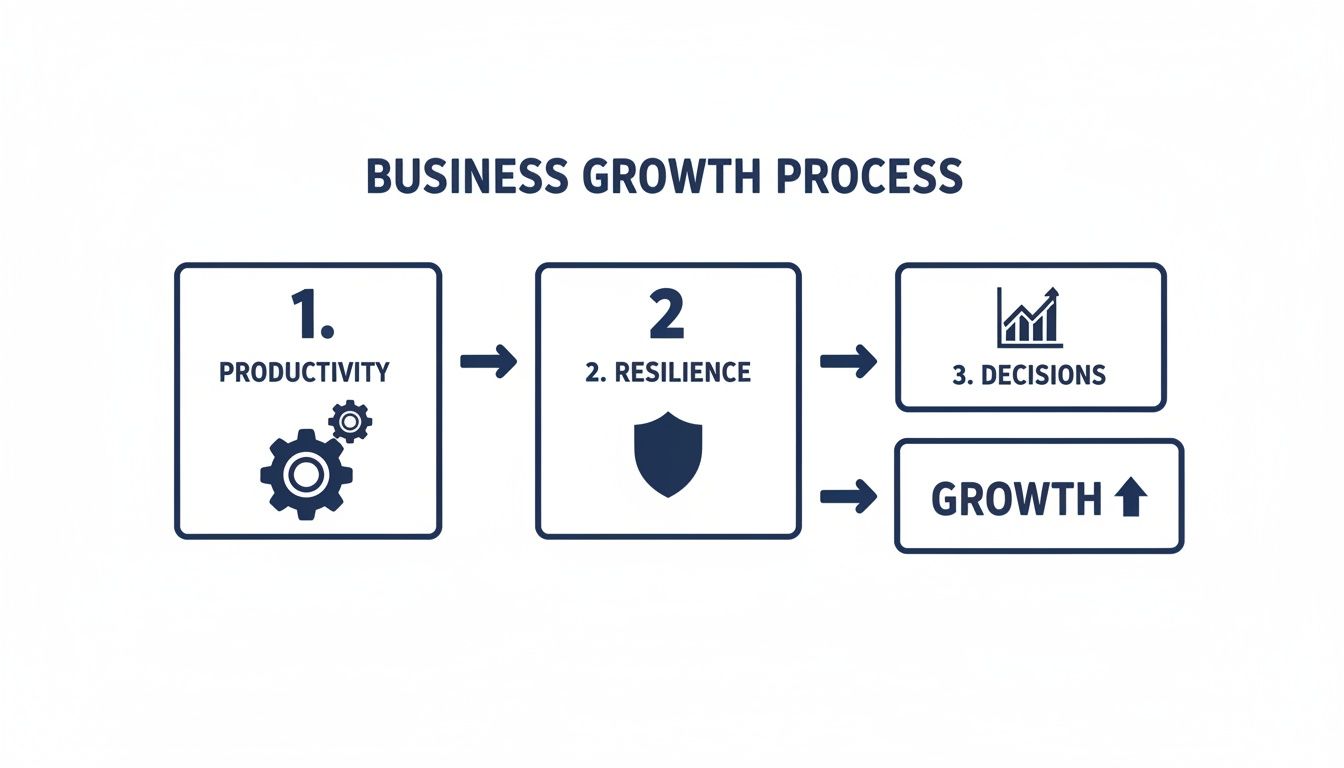
As you can see, improved operational efficiency is the first domino to fall, creating a more robust and data-driven organisation.
Phase 4: Measure Success and Continuously Improve
Your digital transformation journey doesn't end when the system goes live. The final, ongoing phase is all about measuring your success and constantly looking for opportunities to optimise. This brings you full circle, right back to the business-focused goals you set at the very beginning.
Establish clear Key Performance Indicators (KPIs) to track your progress. You'll want a healthy mix of hard numbers and human feedback.
| Metric Type | Example KPIs |
|---|---|
| Quantitative | - Reduction in time spent on manual data entry - Decrease in project delays |
| Qualitative | - Team feedback on ease of collaboration - Improvement in employee satisfaction surveys |
Review these metrics regularly with your leadership team and, just as importantly, gather feedback from the people using the tools every day. Technology isn't static; it evolves, and so do your business needs. This continuous improvement loop ensures your investment keeps delivering value long after the initial rollout. This is where a Virtual CFO service can be invaluable, helping analyse these metrics to give you a clear picture of your return on investment and guide future tech decisions.
Strengthening Your Defences in a Digital World

The more you connect your business tools and data, the bigger your digital footprint becomes—and with it, your attack surface. Cybersecurity isn't just an "IT problem" anymore; it’s the very foundation of a resilient modern workplace technology strategy. It’s what lets you innovate with confidence.
And let's be clear, the threat is very real for New Zealand businesses. Early 2023 data shows an internet penetration rate of 95.9% among 4.99 million users, creating a huge opportunity for digital growth. But there's a flip side. Information security and fraud have become the biggest barriers to digital adoption, with a staggering two-thirds of businesses admitting they've faced cybersecurity issues in the last year alone. You can dig into these trends in New Zealand's digital landscape for the full picture.
From clever phishing emails tricking your team into sharing passwords to ransomware attacks that can grind your entire operation to a halt, a proactive defence is simply non-negotiable.
Building Your Defensive Layers
Real security isn't about one magic-bullet tool. It’s about creating multiple layers of protection that work together. If one layer is breached, another is ready to stop the threat. In today's environment, this multi-faceted approach is the only way to safeguard your data, reputation, and finances.
Key defensive measures should include:
- Endpoint Protection: This is far more than just traditional antivirus. Modern solutions actively monitor laptops, phones, and tablets for any suspicious behaviour, stepping in to stop threats before they can take hold.
- Network Security: A solid firewall is your first line of defence, acting as a gatekeeper that controls the traffic coming in and out of your network. It’s absolutely crucial for blocking unauthorised access.
- Identity and Access Management (IAM): This is all about making sure only the right people can access the right information. Tools like multi-factor authentication (MFA) add a simple but powerful verification step, making it much tougher for attackers to use stolen credentials.
Security isn't a "set and forget" task. It’s a continuous process of monitoring, updating, and adapting to new threats as they emerge. This is exactly where a managed security service becomes invaluable, providing constant vigilance so you can stay focused on your business.
The Human Element in Cybersecurity
All the technology in the world won't protect you if your team isn't on board. Cybercriminals often target your people first, which makes security awareness training an absolutely essential part of your defence.
Regular, engaging training helps your staff spot and report phishing attempts, use strong passwords, and understand the critical role they play in protecting the company’s digital assets.
A well-informed team is one of your strongest security assets. When people understand the risks and know what to look for, they go from being a potential vulnerability to a vigilant human firewall. Creating a culture where security is everyone's responsibility is one of the most powerful moves you can make. For a deeper dive, check out our ultimate guide to cybersecurity for NZ companies.
Ultimately, robust security underpins every other piece of your tech stack. It ensures your collaboration platforms, cloud data, and automated workflows are assets driving growth—not liabilities waiting to be exploited. Partnering with a managed cybersecurity provider like Wisely means having experts to handle the complexities of threat detection, incident response, and compliance, giving you the peace of mind to push your business forward.
Your Modern Workplace Technology Questions Answered
Bringing new systems into your business always raises a few questions. As a business leader, you’re right to weigh up the costs, the benefits, and the potential disruption. Getting clear, honest answers is the only way to move forward with real confidence.
We hear the same concerns from Kiwi businesses time and time again. These aren't just abstract worries; they're the practical hurdles every organisation has to clear on its way to a more efficient, modern setup. So, let's tackle them head-on.
Where Should a Small Business Start?
The best place to start is almost always with your biggest operational headache. It’s tempting to want to fix everything at once, but that’s a recipe for disaster. Instead, find the one area where clunky manual processes, poor communication, or scattered information is costing you the most time and causing the most frustration.
For a lot of small businesses, that pain point is in collaboration or workflow management. Bringing in a central platform like monday.com can deliver an immediate, noticeable win. It helps organise projects, automates repetitive tasks, and gives your team a single source of truth to work from.
Tackling one high-impact area first provides quick, tangible value. It also builds the momentum you need for bigger projects, like a full cloud migration or a major cybersecurity upgrade. A professional technology health check is brilliant for pinpointing these starting points, ensuring your first investment delivers a clear and immediate return.
How Can We Ensure Our Team Actually Uses New Tools?
User adoption is everything. You can have the most powerful software in the world, but it's worthless if your team doesn't use it. Getting this right comes down to three things: choosing intuitive tools, providing great training, and proving the value to your people.
First up, get your team involved in choosing the tool. When they have a say, you can be sure the software solves their actual, day-to-day problems, not just the ones you think they have. Next, work with an expert to deliver structured, role-specific training. Make sure ongoing support is easy to find, so everyone feels confident from day one.
Most importantly, leadership has to walk the talk. Use the new tech consistently and openly. When the team sees the boss embracing the change and hears them talking about how it makes everyone’s job easier, genuine adoption will follow. It’s all about answering the "What's in it for me?" question for every single person.
Is This Technology Too Expensive for a Small Business?
This is a common myth, but it’s based on an old-fashioned view of IT. The shift to cloud-based, subscription software (SaaS) has made powerful, enterprise-level technology accessible and affordable for businesses of any size.
Gone are the days of spending a fortune upfront on servers and software licences. Now, you pay a predictable monthly or annual fee, which makes budgeting so much simpler.
The trick is to reframe the cost as a strategic investment. The right technology pays for itself many times over by delivering:
- Greater efficiency as automation takes over repetitive work.
- Fewer costly errors that come from manual data entry.
- Smarter decision-making because you’re working with real-time data.
When you actually calculate the return on investment, you’ll often find that adopting the right modern workplace technology is one of the smartest financial moves a growing business can make. It’s not just an expense; it’s fuel for growth.
Ready to build a smarter, more secure, and productive workplace? The experts at Wisely can design and implement an integrated technology solution that drives real business growth. Learn how our managed IT, monday.com, and Virtual CFO services can help you thrive.