You've probably heard the term "TPN" thrown around, but what does it actually mean for a post-production studio? The Disney Trusted Partner Network (TPN) is essentially a security standard, a set of best practices established by the Motion Picture Association (MPA) to protect high-value film and TV content from leaks and piracy.
In simple terms, Disney TPN compliance is your studio's passport to work on pre-release content from the biggest names in the business. If you want a seat at the table with Disney and other major studios, you have to play by their security rules.
Why TPN Is a Game Changer for NZ Studios
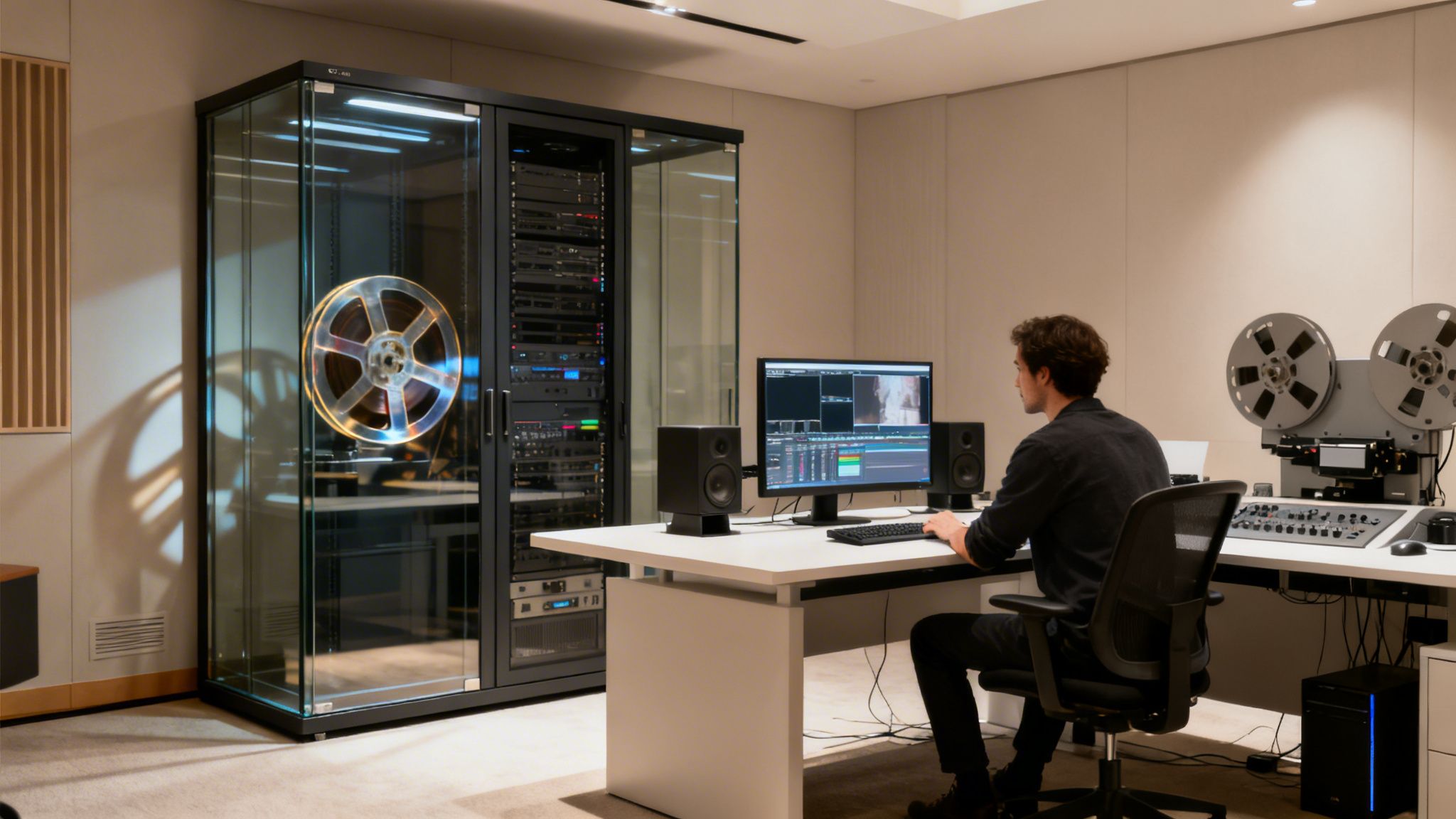
Imagine a blockbuster film sitting on your servers weeks before its premiere. Every frame, every sound file, every visual effect is a secret worth millions. A leak wouldn't just spoil the story; it would cost the studio a fortune in lost revenue and marketing impact. This is precisely what the TPN programme was designed to prevent by creating a unified security benchmark for the entire media supply chain.
For a post-production house in New Zealand, TPN is much more than just a box-ticking exercise. It's the key that unlocks the door to the most exciting and lucrative projects. Without it, you’re on the outside looking in, unable to even bid for work from Disney, Netflix, Universal, and other members of the MPA.
The Opportunity in New Zealand
Thanks to the explosive growth of streaming, the demand for TPN-compliant partners has never been higher. Here in New Zealand, Disney+ has seen massive growth since its launch, with viewership projected to hit 1,058,000 people in an average four-week period by June 2025.
That’s a staggering 47.6% increase from just four years prior, a clear sign of the huge local appetite for on-demand content. You can learn more about the rise of subscription TV services in New Zealand and what it means for the industry.
This surge in content creation creates a direct and pressing need for local studios that can be trusted to handle it securely. For post-production businesses with TPN-compliant IT infrastructure, this boom isn't just an opportunity—it's a massive competitive advantage.
TPN compliance isn't just about protecting content; it's about signalling to the world's biggest content creators that your studio operates at a global standard of security and professionalism.
Becoming a trusted partner opens up access to the kind of premier projects that build a studio's reputation for years to come. The TPN programme gives you a clear and structured way to get there.
The TPN framework is built on a few fundamental security domains, providing a comprehensive approach to safeguarding intellectual property.
Core Pillars of the TPN Security Programme
| Security Pillar | Objective |
|---|---|
| Physical Security | Protecting your actual premises, from server rooms and edit suites to entry points and visitor access. |
| Digital Security | Securing your network, data storage, and digital assets against cyber threats like hacking and malware. |
| Management Policies | Implementing secure workflows, robust staff training, and strict access controls to minimise human error. |
These pillars work together to create a holistic security posture. This guide will serve as your practical roadmap, breaking down the requirements and steps needed to achieve Disney TPN compliance and position your studio for success.
Decoding the TPN Security Requirements
Cracking open the official Trusted Partner Network (TPN) security document can feel a bit like reading dense legal text. But once you get past the jargon, you’ll find it’s less about passing a single, stressful test and more about building a robust security culture. Disney TPN compliance is about weaving security into the very fabric of your day-to-day operations.
Think of your studio like a high-security vault. You wouldn’t just rely on a big, heavy door. You'd have reinforced walls (physical security), a state-of-the-art alarm system (digital security), and strict protocols for who gets the keycard (management policies). Every single piece is critical to protecting what’s inside.
The TPN requirements are built around these exact ideas. Let’s break them down into practical themes that actually make sense for a working studio.
Physical and Environmental Security
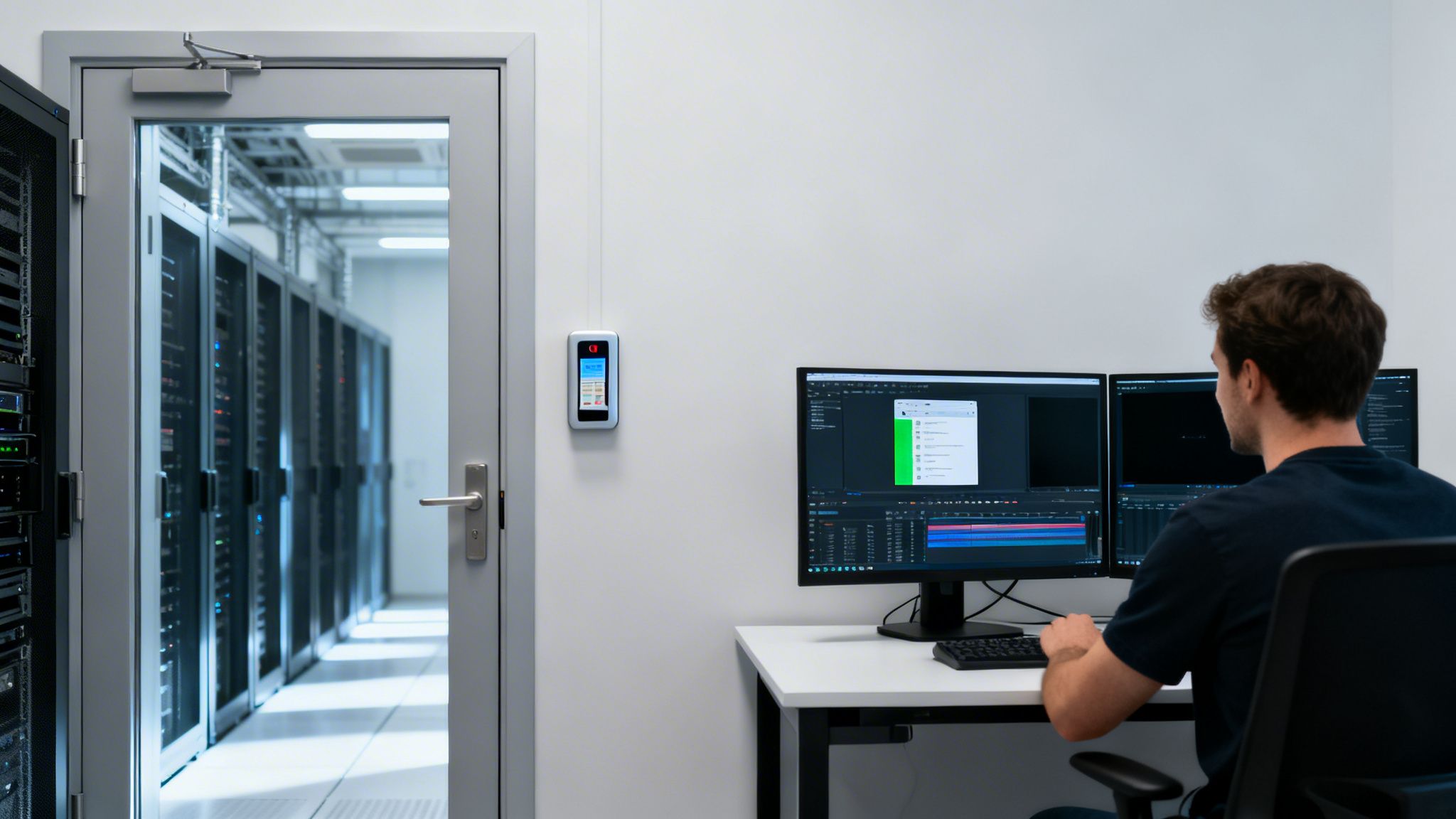
This is the most concrete part of TPN compliance—all about controlling the physical spaces where content lives and breathes. It means locking down every possible point of entry, from the reception desk right through to the server room.
Picture an editor working on a pivotal scene for a blockbuster. That room needs to be a secure bubble with controlled access. And the server room? It can’t be a repurposed broom closet. It needs to be a dedicated, locked space with its own climate controls and a very short list of people who are allowed inside.
Key things to get right include:
- Access Control: Using keycards or biometric scanners so you know exactly who is entering sensitive areas and when.
- Visitor Management: Having a rock-solid process for signing in, badging, and escorting any visitors. No one wanders around unescorted.
- Secure Perimeters: Making sure all doors, windows, and other entry points are properly secured against any unauthorised entry.
Digital Security and Content Handling
Here, we're building the digital fortress that protects your data. This covers everything from your network design to how individual files are moved and stored. The guiding principle is least privilege—a simple but powerful idea that people should only have access to the exact files and systems they need to do their job, and nothing more.
For instance, a colourist grading a 30-second trailer has no business accessing the entire film’s raw footage. Their access should be restricted to only the clips they need for that specific task. This one practice massively shrinks the risk of accidental leaks or someone grabbing content they shouldn't have.
Another non-negotiable is data encryption.
TPN insists that all content—whether it’s sitting on a hard drive (at rest) or being sent over the internet (in transit)—must be encrypted. This turns your priceless creative work into gibberish for anyone without the right digital key.
This means using secure file transfer tools instead of plain old email to send dailies, and making sure the drives in your servers and workstations are fully encrypted. If you’re looking to get your digital defences in order, our guide to cyber security for companies in NZ is a great place to start.
Management and Personnel Policies
Technology is only half the battle. Your team and your internal processes are just as crucial. Disney TPN places a huge emphasis on fostering a security-conscious culture through clear policies and continuous training. At the end of the day, your people are your first and best line of defence.
This means documenting clear procedures for everything, from how you bring on a new freelancer to how content moves through your pipeline. Every single person on the team needs to understand their role in protecting the project.
Key policies to nail down:
- Security Awareness Training: Running regular training sessions to keep your team sharp on new threats like sophisticated phishing scams and to reinforce your security rules.
- Incident Response Plan: Having a step-by-step playbook ready to go before a breach happens, so everyone knows exactly what to do.
- Asset Management: Keeping a detailed inventory of all your hardware and software, making sure everything is tracked, patched, and configured securely.
By translating the official TPN checklist into these practical pillars, you can start to see a clear path forward. The real goal isn’t just to tick boxes, but to build a secure environment where protecting content is second nature to everyone.
Navigating the TPN Audit Process Step by Step
Kicking off a Trusted Partner Network (TPN) audit can feel like preparing for a final exam you can’t afford to fail. But it’s much more helpful to see it as a guided deep-dive into your studio’s security health. The whole point isn’t to catch you out; it’s to strengthen your defences and prove you can protect high-value content for clients like Disney.
A good way to think about it is preparing your house for a professional building inspection before a big sale. You’d walk through every room yourself, fixing the leaky tap and patching that hole in the wall long before the inspector shows up. The Disney TPN audit follows that same logical path, starting with your own internal prep work before moving to a formal, third-party assessment.
This isn't a solo mission. It’s a team effort between your studio, a qualified TPN assessor, and the TPN organisation itself. Each has a specific role to play in confirming your security measures are up to the MPA’s demanding standards.
The Self-Assessment Phase
Before you ever call in an external auditor, the first step is always to look in the mirror. This is your chance to do a full internal review against the official TPN security guidelines. You'll work through the TPN’s questionnaire, methodically checking every part of your operation, from the locks on the doors to your digital network firewalls.
Honestly, this self-assessment is gold. It helps you spot the obvious gaps and quick wins—the "low-hanging fruit"—that you can sort out fast, saving you a heap of time and money down the track. It also forces you to get all your documentation in one place, which makes the formal audit go a whole lot smoother.
Key jobs during this phase include:
- Documenting everything: Pull together your security policies, network diagrams, staff training logs, and incident response plans.
- Finding the weak spots: Be brutally honest about where your controls don’t quite meet the TPN requirements.
- Making a fix-it list: Create a clear, prioritised plan to address all the issues you’ve uncovered.
Engaging a Qualified Assessor
Once your internal review is done and you’ve got a clear handle on where you stand, it's time to bring in a professional. You have to choose an assessor who is officially accredited by the TPN. These are independent security experts who live and breathe the TPN framework.
Their role isn't just to inspect; it's to guide. A good assessor will work with you to understand your specific workflows and explain how the TPN controls apply to your unique setup. They’re the impartial third party who will validate your security setup for the TPN.
Your assessor is your partner in proving compliance. Their job is to verify your controls and report their findings back to the TPN. Being transparent and prepared is the secret to a great partnership.
The Official On-Site Assessment
This is the main event. The assessor will visit your facility to carry out the formal audit. Expect a mix of interviews, document reviews, and a physical walk-through. They’ll want to chat with key people, from your IT crew to facility managers, to see how your policies actually work day-to-day. For studios wanting to get the team motivated for this, understanding the benefits of meeting security compliance can really help build momentum.
The assessor will physically inspect your studio, checking everything from the server room door locks to your network firewall configurations. They are there to make sure the controls you've written down on paper are actually in place and working effectively in the real world. Getting ready for this stage is crucial, so it pays to fully understand what a TPN assessment entails and how to get ready.
After the on-site visit, the assessor pulls together a detailed report of their findings. This report is then sent off to the TPN for the final review and, hopefully, your approval.
Building Your TPN Readiness Checklist
Successfully navigating the Disney TPN audit process starts long before the official assessor sets foot in your facility. It all begins with a thorough and honest self-evaluation. Think of it as a pre-flight check for your studio; you wouldn't launch a plane without ensuring every system is green, and you shouldn't enter an audit without first confirming your security posture is sound.
Creating a readiness checklist is hands-down the most effective way to gauge where you currently stand against TPN standards. It transforms what feels like a mountain of security controls into a manageable, step-by-step to-do list, empowering you to take control of the process. This isn't just about finding problems; it's about building a solid foundation for a long-term security culture.
This flow diagram gives a clear picture of the key phases in the TPN audit journey.
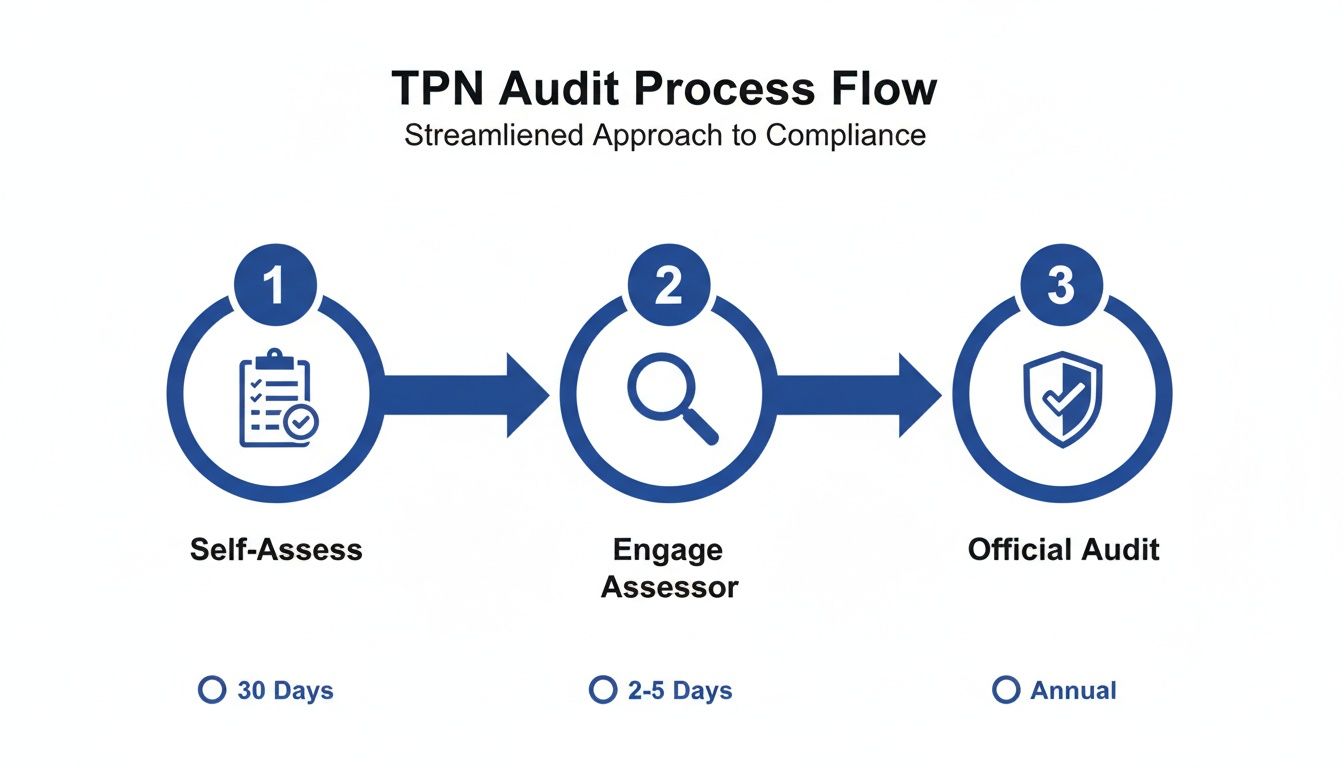
As you can see, a structured approach that kicks off with a detailed self-assessment sets the stage for a much smoother and more successful official audit down the line.
Core Areas for Your Checklist
Your self-assessment checklist should be organised into clear, logical categories that mirror the TPN's own security domains. This is the best way to make sure you cover all your bases methodically. Start by breaking down your operations into these key areas:
Physical and Environmental Security: This means getting up from your desk and doing a physical walk-through of your facility. Check everything from door locks and CCTV coverage to visitor sign-in procedures and the physical security of your server room. Does every sensitive area require keycard access? Is there a log of who enters and when?
Network Security: How is your digital perimeter protected? This involves examining firewalls, network segmentation (crucial for keeping project data separate from general office traffic), and Wi-Fi security. You need to be sure there are no unauthorised devices connected to your critical networks.
Asset and Content Management: This area focuses on how you track and control both digital content and the physical hardware it lives on. Do you have a complete inventory of all servers, workstations, and hard drives? How do you manage user access to specific project files? The goal is to prove you know where every piece of content is at all times.
Personnel Security: Your team is your greatest asset, but they're also a key part of your security framework. Your checklist should verify that you have robust procedures for background checks, ongoing security awareness training, and clear policies for handling access for freelancers and departing employees.
From Checklist to Action Plan
Once you’ve worked through your checklist and identified the gaps, the next step is to create a remediation plan. This is where you turn your findings into concrete actions. Don't try to fix everything at once; prioritise based on risk and effort.
A critical vulnerability, like an unpatched internet-facing server, should be at the very top of your list. A less urgent administrative task, like updating a minor policy document, can wait. This risk-based approach ensures you tackle the most important issues first.
For each gap, your plan should detail the specific steps needed, who is responsible for the fix, and a realistic timeline for completion. This organised approach is exactly what TPN assessors want to see, as it demonstrates a mature and proactive approach to security management.
This structured process is especially vital in New Zealand's growing media landscape. Disney+ viewership in New Zealand is projected to skyrocket by 47.6% to 1,058,000 monthly users by mid-2025, driving intense demand for local studios with secure, automated workflows. Production houses face immense pressure to deliver flawless work under tight schedules, making TPN-compliant IT infrastructure a non-negotiable for securing Disney partnerships. Wisely helps bridge this gap by implementing secure, digitised workflows that connect creative teams for seamless collaboration. Explore more statistics on Disney's user growth.
A comprehensive readiness checklist and a prioritised action plan are your roadmap to Disney TPN compliance. They demystify the requirements and provide a clear path forward, making sure you're fully prepared when it’s time for the official audit.
Implementing TPN Controls in the Real World
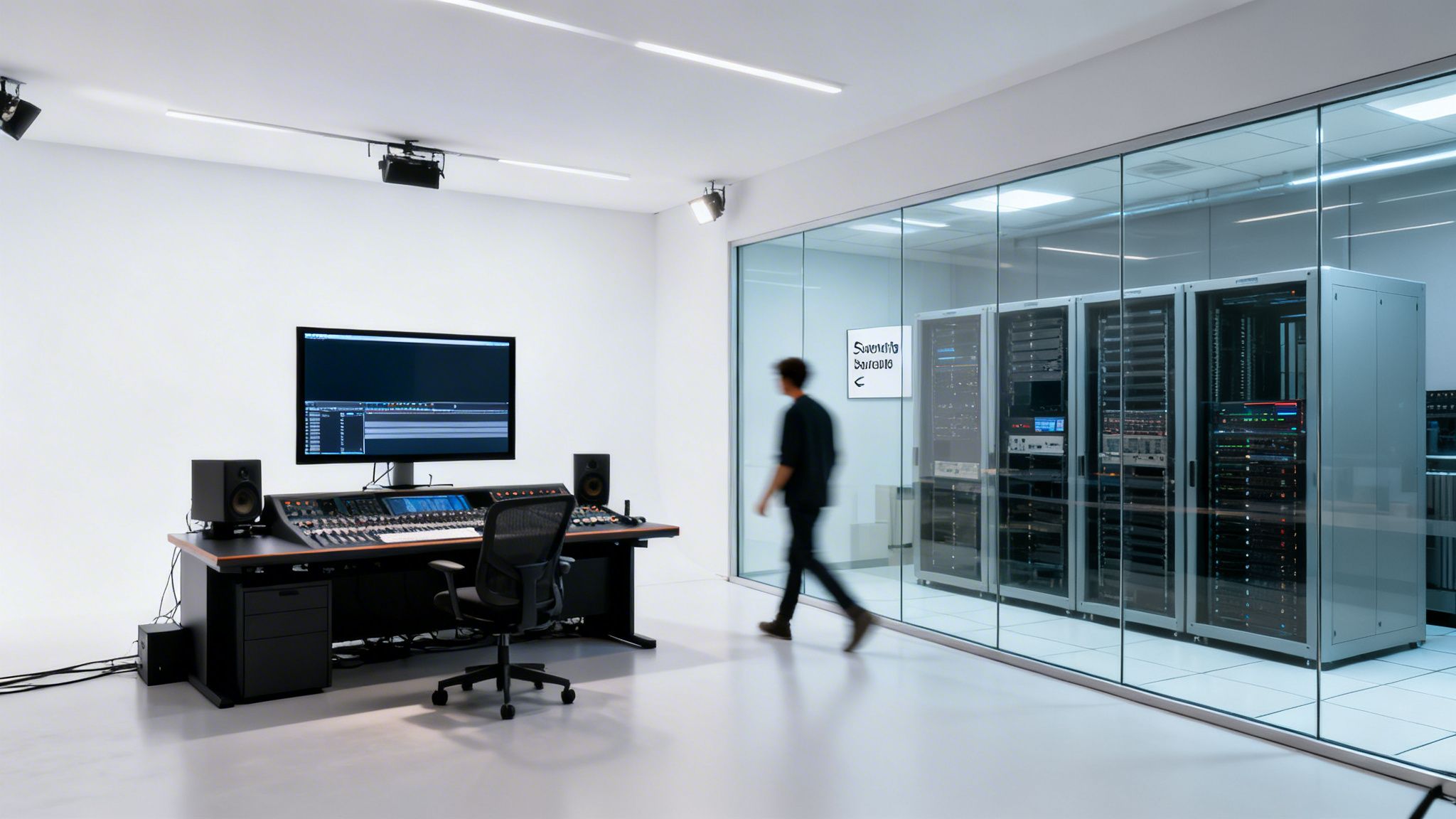
Moving from theory to tangible action is where your Disney TPN journey really gets interesting. Checklists and policies are one thing, but weaving these security controls into your daily creative workflow is what truly protects high-value content. It’s all about making security a seamless, almost invisible part of how your studio operates.
The goal isn't to slow anyone down; it's to build a secure ecosystem that protects assets without stifling the fast-paced, collaborative nature of post-production. This requires a smart blend of technology and process, making sure every control serves a clear purpose. Let's dig into the proven best practices that form the backbone of a TPN-compliant studio.
Fortifying Your Digital Perimeter with Network Segmentation
Think of your studio's network as a large, open-plan office. If one person gets a cold, everyone is exposed. Network segmentation is the digital equivalent of building walls, creating separate, secure "rooms" for different functions and projects.
This simple but powerful strategy is a core requirement for Disney TPN. It ensures that your general office network—used for emails and admin—is completely isolated from the high-security network where your precious project files live. A breach on the less secure network can't spread to your critical assets.
This same logic applies to individual projects. You can create a unique, isolated network zone for each film or series. This means the team working on Project A can’t see or access a single file from Project B, drastically reducing the risk of accidental data leaks or unauthorised access.
Mastering Control with Asset Management and Access Controls
Knowing exactly who has access to what, and when, is completely non-negotiable. This is where a robust Media Asset Management (MAM) system, combined with strict access controls, becomes your central command centre. A good MAM doesn't just organise your files; it tracks every version and logs every touchpoint.
This is a practical application of the principle of least privilege, a bedrock concept in TPN security.
In a TPN-compliant workflow, an editor, a sound mixer, and a colourist working on the same scene should never have identical access rights. Each person is granted access only to the specific files required for their task, for the exact duration they need them.
Modern IT solutions make this granular control completely achievable. You can enforce policies that prevent files from being copied to USB drives, block unauthorised cloud uploads, and automatically revoke access the moment a task is complete. This is precisely the level of control TPN auditors want to see.
The New Zealand media landscape highlights just how urgent this is. By June 2025, Disney+ is expected to have 1,058,000 viewers in New Zealand every four weeks—a massive 47.6% jump since 2021. For local studios pursuing TPN certification, this growth means ramping up secure IT to support Disney's expanding ecosystem. Wisely helps achieve this with custom workflows and integrations that give operations teams real-time control over their post-production pipeline. Find out more about Disney's impressive subscriber growth.
Here's how Wisely’s services directly map to the TPN controls you need to implement:
TPN Control vs. Wisely Solution
| TPN Requirement | Wisely's Solution | Benefit for Your Studio |
|---|---|---|
| Network Segmentation & Isolation | Managed Network Services & Firewall Configuration | Creates secure, isolated zones for projects and general business, preventing breaches from spreading. |
| Principle of Least Privilege | Identity & Access Management (IAM) Integration | Ensures staff can only access the specific files they need, for the time they need them, minimising insider risk. |
| Asset Tracking & Management | Custom MAM & DAM Workflow Integrations | Provides a clear audit trail for every asset, from ingest to delivery, showing who touched what, and when. |
| Data Encryption (At Rest & In Transit) | Secure Cloud Storage & Encrypted File Transfer Solutions | Protects your content from being read or used even if it's intercepted or stolen. |
| Logging, Monitoring & Auditing | 24/7 Security Operations Centre (SOC) & SIEM | Delivers continuous threat monitoring and detailed logs needed to prove compliance and investigate incidents. |
| Backup & Disaster Recovery | Managed Backup & Business Continuity Planning | Guarantees you can restore operations quickly and securely after any data loss event. |
By partnering with an expert, you can transform these complex requirements into a streamlined, secure, and efficient operational reality.
Essential Practices for a Secure Foundation
Beyond segmentation and access controls, several other technical practices are crucial for building a TPN-compliant environment. These controls work together to create layers of defence around your valuable content.
Data Encryption: All content must be encrypted, both when it's sitting on your servers (at rest) and when it's being sent over a network (in transit). This renders the data unreadable to anyone without the proper decryption key, making it useless even if stolen.
Comprehensive Logging and Monitoring: You need to have detailed logs of all system activity. This includes who logged in, what files they accessed, and any changes they made. These logs are critical for investigating security incidents and proving compliance during an audit.
Regular Backups and Disaster Recovery: Secure, encrypted backups are a must. A TPN-compliant studio needs a proven plan to restore operations quickly and securely after any kind of data loss, whether it's a hardware failure or a cyber attack.
By implementing these real-world controls, your studio moves beyond simply aiming for compliance. You build a resilient, secure, and efficient operation ready to take on the world’s most demanding content creation projects.
How a Strategic Partner Simplifies Your TPN Journey
Getting your Disney TPN compliance sorted is a huge win. It's solid proof that your studio meets a global standard for security, which is exactly what you need to land those high-value projects in today's streaming boom. For New Zealand studios, it’s a critical investment.
But let’s be honest—the road to compliance can feel like a maze. It’s a complex process that eats up resources and demands serious know-how across IT, cybersecurity, and project management. This is where bringing in a specialist partner changes the game, turning a daunting challenge into a clear, manageable project. You don't have to figure it all out on your own.
A strategic partner is your guide and your hands-on implementation team, pulling the entire process together under one roof. They bring the specific knowledge needed to turn TPN's security controls into practical, real-world solutions that actually work with your unique creative workflow.
A Unified Approach to Compliance
Instead of trying to coordinate different vendors for your IT support, cybersecurity fixes, and audit prep, a single partner gives you a cohesive plan. At Wisely, this is exactly our approach. We integrate all the necessary pieces into one structured project, covering everything from the first gap analysis right through to final audit readiness.
This unified model includes:
- Managed IT and Cybersecurity: We'll implement the technical controls TPN demands, like proper network segmentation, fine-tuned access controls, and robust data encryption.
- Process Management: Using powerful platforms like monday.com, we build out a detailed remediation plan, assign clear tasks, and gather all the evidence you’ll need for the audit.
- Expert Guidance: We provide the strategic oversight to make sure every step lines up perfectly with TPN best practices and your studio’s operational reality.
Choosing the right partner isn't just about finding a vendor; it's about gaining a long-term ally. They should be invested in your growth, ready to provide ongoing support to help you maintain compliance long after the first audit is done and dusted.
Plan, Build, Deliver: Your Path to TPN Success
Our structured ‘plan-build-deliver’ approach makes the journey smooth and predictable. We start by mapping out your route to compliance, then we get to work building and implementing the necessary security controls. Finally, we help you deliver the evidence and prepare your team for a successful audit. It’s a method that turns a complex regulatory hurdle into a straightforward pathway for growth.
Navigating compliance requires a deep understanding of security assessments. When selecting an ally for your TPN journey, it's useful to know how to find a reliable pentest partner who can assist with the security validation process. For studios looking for a holistic solution, our guide to managed IT services for New Zealand businesses explains how an integrated service model can support your TPN goals and beyond.
Got Questions About Disney TPN? We Have Answers.
Stepping into the world of the Disney TPN programme always kicks up a few practical questions. It’s a big move, and it’s smart to get the details straight. We’ve rounded up the most common queries we hear from studios and laid out some clear, real-world answers.
How Much Does TPN Compliance Cost?
There's no single price tag for Disney TPN compliance, because the final cost really depends on how solid your studio's security is right now. If you’ve already got good controls in place, you might only be looking at minor tweaks and the cost of the audit itself.
On the other hand, a studio starting with some serious security gaps will have a bigger bill. This could mean investing in new hardware like firewalls and servers, asset management software, and the expert help needed to get it all set up and running correctly.
It’s better to think of TPN as an investment in your studio’s future, not just a one-off expense. The cost unlocks access to a much higher tier of projects, delivering a strong return over time.
Think of it as a spectrum:
- Low End: Minor policy updates and the official audit fees.
- High End: Major infrastructure upgrades, new security systems, and extensive consultancy.
What’s the Timeline From Start to Finish?
Just like the cost, the timeline for getting Disney TPN compliant can vary a lot. The biggest factor is how much remediation work you need to do after your initial self-assessment.
A studio that's already well-prepared can get through the process pretty quickly, potentially achieving compliance in three to four months. This covers the self-assessment, finding and engaging an assessor, and getting the official audit done.
But for studios that need to make significant security upgrades, the journey will be longer. A more realistic timeframe could be six to twelve months, or even more if you’re looking at major changes like building a secure server room or completely overhauling your network architecture.
What’s Required to Maintain TPN Status?
Getting your initial Disney TPN certification is a huge milestone, but it's definitely not the end of the road. TPN compliance is an ongoing commitment to keeping your security sharp, not a certificate you hang on the wall and forget about.
To keep your status current, you'll need to:
- Conduct Annual Self-Assessments: Every year, you have to complete the TPN questionnaire to review your security controls and confirm everything is still up to scratch.
- Undergo Re-Assessments: A full, on-site audit by a qualified assessor is required periodically to re-validate your compliance and make sure nothing has slipped.
- Stay Current: You must adapt to any updates in the TPN security guidelines and be ready to tackle new threats as they pop up.
This continuous process is what keeps the entire creative supply chain secure, reinforcing the trust that Disney and other major content owners place in their partners.
At Wisely, we transform the complex TPN journey into a clear, managed project. From implementing technical controls to preparing for your audit, we provide the unified solution to get you compliant. Learn more at https://www.wiselyglobal.tech.